Narayan Gangaram Surve was born a hundred years ago, abandoned on a pavement in Mumbai, with no name, no caste, no inheritance. He was taken in by Kashi Bai and Gangaram Kushaji Surve, both workers in the textile mills of Central Mumbai’s Girni Kamgar district. He never went to university. He went to the mill. And from that mill, from the basti, the chawl, the protest march, and the trade union meeting, he built one of the most distinctive voices in twentieth-century Marathi literature.
His seminal collection Maaze Vidyapeeth, My University, said it plainly: the pavement and the factory floor were where he was educated. In 145 poems written across decades, he gave language to the working classes– their hunger, their daily endurance, their refusal to be made invisible. When he compared the moon to a piece of bhakri, he was not being folksy. He was insisting that poetry answer to the reality of hunger before it answers to beauty.
It is precisely for this reason that Narayan Surve belongs in any serious account of modern India’s intellectual history. The question of who gets to think and from where, and in whose language, runs like a fault line through Indian modernity. Surve did not argue for the inclusion of the working class in existing literary culture rather he built a different literary culture from the ground up.
To mark his centenary, we are publishing a special note by playwright, journalist and cultural commentator Ramu Ramanathan on Surve based on the latter’s preface to Sanad, one of his most significant poetry collections. Published in 1982, Sanad was a collection of Surve’s poems edited by the celebrated Marathi poet and playwright Kusumagraj. The title is pointed: sanad means a credential, a certification. For a poet who had none of the usual qualifications, the word carried an edge. Surve’s preface is part autobiography, part poetics, part manifesto, describing his formation in the mills, his debt to Annabhau Sathe, and a philosophy arrived at after a lifetime of struggle: no caste, no religion, no gotra, only the fact of being human.
At one hundred, that remains a radical position.
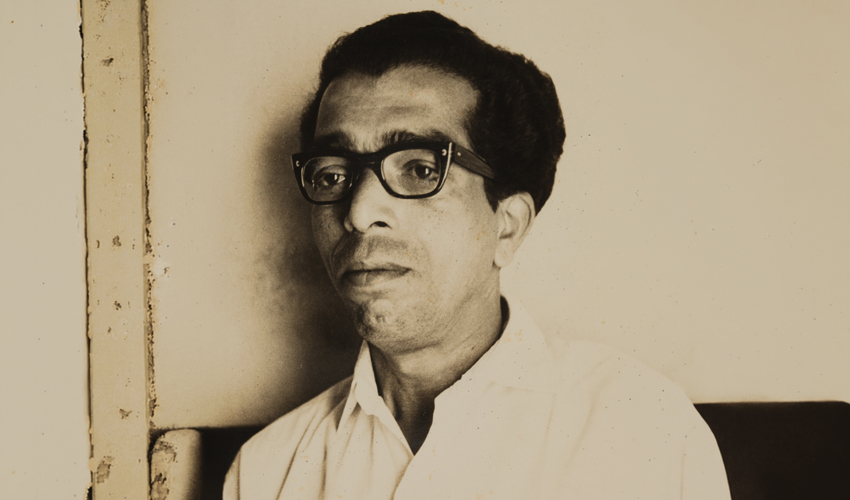 In the topography of modern Indian literature, the textile mills of Central Mumbai (the Girni Kamgar district) do not typically appear as a university. They are remembered as factories of cloth, engines of colonial and post-colonial capital, and eventually, ghosts of a de-industrialised past. Yet, for Narayan Gangaram Surve, these mills were the primary site of an intellectual awakening that redefined the landscape of Marathi poetry. As Maharashtra celebrates his hundredth anniversary, and as we reflect on Surve’s life, his preface to Sanad (a collection of Surve’s poems edited by renowned Marathi poet and playwright, Kusumagraj in 1982) provides a clue. On reading it, one is struck not just by his personal trajectory, but by how he dismantled the very idea of what a poet in India was supposed to be.
In the annals of twentieth-century Indian literature, few poets carry the raw, visceral ache of Narayan Gangaram Surve. An abandoned child, found on a pavement in Mumbai. He was a lawaris soul, left to his own fate. But as he says, his origin, or lack thereof, became his greatest liberation. He did not come from a lineage of landowners or high-and-mighty parents. He was adopted by a working-class couple, Kashi Bai and Gangaram Kushaji Surve, both mill workers. In the preface, Surve says, “I didn’t have a name, and a name was anointed on me—Narayan Gangaram Surve—by my working-class mother and father. They introduced me to the voiceless people in our basti, to the working class community.” He adds, “There is no caste among the working class; this was the truth my parents instilled in me.”
“There is no caste among the working class; this was the truth my parents instilled in me.”
In a country where holding one’s head high often requires the signifiers of caste, religion, or gotra, Surve found a different path: he became, simply, a working class man. He writes, “I was shaped like iron in a furnace; my eyes, brain, and ears were open to the world, and this became my schooling.” Surve’s advice is, “Immerse yourself in the daily stories of workers and the poor. The poetry should emerge from the “workshop of literature” that is the living, breathing environment of the working class, not from academic detachment.” His seminal collection Maaze Vidyapeeth (My University) acts as a metaphor for his entire philosophy. By labeling the “pavement” and the “factory” as his university, he decimated the elitist definition of knowledge. This technique elevated the hard labour, survival on the shop floor, and social justice of the urban poor to a status equivalent to, or higher than, formal academic training
His education was not found in the sanitised classrooms of a university, but in the cacophony of the textile mills: the Girni Kamgar. From a tender age, he was exposed to the mechanics of the city: spinning, weaving, binding. His world was shaped by the gaslight lamps of his home, the 12-hour shifts that his parents endured without the protection of labour regulations, and the fervent slogans of the Indian nation in the throes of fighting British imperialism. As Surve says, the lesson he learnt was “To remain a gulam (slave) is a crime against humanity, and it is our duty to ensure that others do not remain slaves.”
In the essay he also spells out his way of life– “I do not have a caste, I do not have a religion, I do not espouse a gotra; my only identity is that I am a human being”. This is not easy. So how does one do it? Surve offers, “Participate actively in the movements of your time. Whether it is picketing at a gate, shouting slogans in a protest rally, or working in the trade union, or postering the walls of the city, physical and intellectual presence in these struggles provides a depth of experience that cannot be replicated by reading alone.”
“I do not have a caste, I do not have a religion, I do not espouse a gotra; my only identity is that I am a human being”
The working class movement became his gharana. Surve’s transformation into a poet of the people was inextricably linked to this environment. He began to develop what he called his “third eye”. He says, “In addition to my two eyes, a third eye opened. This was possible due to scientific temper and rationalist thought that saw the present society not as a static status quo, but as something to be challenged and transformed.” This was a perspective gained through Marxism, Leninism, and the scientific temper, which allowed him to see beyond the narrow confines of life in a basti. This third eye did not just help him cope with the harshness of vastu-sthiti (reality); it allowed him to ask the right questions and understand the possibility of change.
Surve rejected formal, classical syntax in favour of the conversational language found in the chawls, textile mills, and street corners. He integrated the slang, dialects, and cadences of the working class to create a “conversational poetry”. This approach allowed him to articulate the anguish and optimism of the marginalised without the “gushing self-indulgence” often found in middle-class Marathi literature.
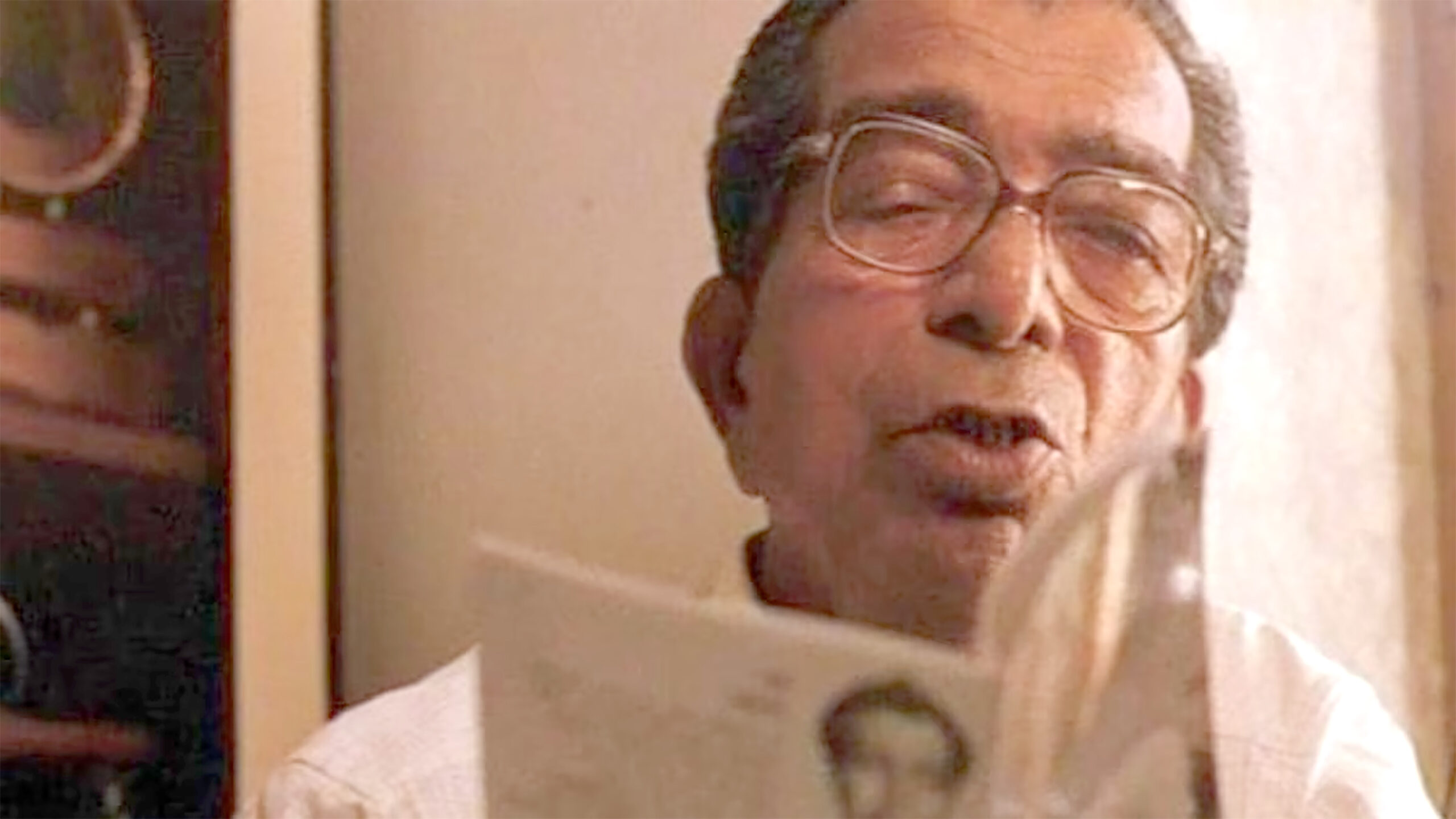
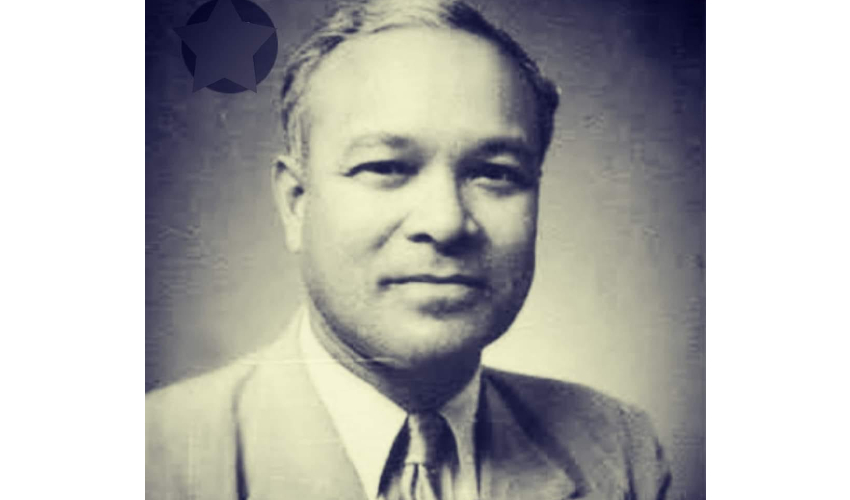
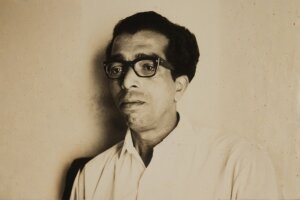
Narayan Gangaram Surve
The poetic process, for Surve, was not an act of detached observation but a reaction built in the “kiln of life”. He treated art as a form of labour. He would write, rewrite, cut, delete, and restart from the first word, enduring the same turmoil one might face in the daily struggle for wages and housing. He was keenly aware of the pitfalls of his craft. He speaks of the tendency to slip into falseness, to lecture, or to become shallow. Great poetry, he believed, was not the “fashionable frustration” of middle-class romanticism, but a reflection of the history and reality of the land. He says, “Even if one door shuts, a few more open, if all the doors shut, then a window opens. I learned from workers, fellow travellers and people in my basti; for me life became an eye-opener.”
His literary awakening coincided with the vibrant Lokanatya movement in the 40s and 50s, which brought literary stalwarts like Shahir Annabhau Sathe, Shahir Amar Sheikh, and Shahir Gavankar to the fore. These artists provided a “cultural renaissance” that resonated across Maharashtra, turning the Shahiri tradition (the power of the ballad or powada) into a backbone for the national struggle. Surve, often hovering around these artists, found his own voice by emulating this commitment to the collective. Surve says, “The individual is isolated, but when many individuals stand together, they become a collective, and once they become a collective, they become the force of change.”
Perhaps Surve’s most significant contribution as song writers to the people’s consciousness was the song Dongri Shet. Born from his deep empathy for the hardships of women and the daily struggle of the household, the song became a folk anthem. It reached every household, and in a triumph that Surve took immense pride in, the people forgot the poet’s name and adopted it as their own. Dongri Shet became a lok geet, a song of the people, untethered from the individual creator.
Later, Surve deployed humour and Bambaiyya lingo to bridge the gap between abstract Marxist theory and the daily struggle of the gullies and maidans of Mumbai. In his poem about Karl Marx, he does not present Marx as a distant, monolithic theorist but as “Markusbaba” who is an active, assertive participant in the struggle who walks alongside the workers. By depicting Marx as a figure who is a fellow comrade during a protest, Surve integrated intellectual history into the rhythm of the street. He made ideology accesible. Also, Surve dismantled the romantic imagery which was the norm. While conventional poetry might associate the moon with beauty or divine grace, Surve identified the half-moon with a “piece of bhakri”. In doing so, Surve connected the pure-and-pristine moon to the hunger of the pavement. He grounded his poetry in material reality, forcing the reader to confront the disparity between high art and the rough-and-tough lives of the worker.
In all this, Surve reserves a particular reverence for Annabhau Sathe, whom he affectionately calls “Anna.” Sathe was a poet of the working class, a man who transformed the powada (ballad) into a potent instrument of resistance. Whether he was singing about the anti-fascist battles in Stalingrad and Spain or the plight of the textile mills, Annabhau’s work resonates because it was never synthetic. Surve observes that Sathe’s genius lay in his ability to weave together lokakala (folk art) and boli bhasha (local dialect). He taught that to write authentically, one must not create from a place of artificiality but from the raw, lived reality of the kiln of daily life. Surve says, “Our understanding of human beings and situations is limited; one needs to be aware, one needs to question everything and everyone. A good poet needs to look beyond the superficial surface.”
Annabhau Sathe’s influence was seismic; his tamashas were so effective that they were eventually banned by the Indian government. Yet, the legacy he left behind transcended his own era. Surve credits Annabhau Sathe and his cultural squad with sowing the vital seeds for what would later become the Dalit literature movement. He showed that art could trigger mass consciousness, accessible to the common worker while maintaining its revolutionary roar.
For Surve, Sathe was a reminder that poetry and struggle are inseparable. He was an artist who spoke truth to power with a confidence that emboldened those around him. In the long arc of Maharashtra’s history, Annabhau Sathe stands as a titan, a writer who understood that when a culture finds its voice, it does not just speak; it is recited by the people. And this was an important lesson which Surve learnt from his literary progenitor Annabhau Sathe. In a poem like Money Order, Surve transformed individual struggle from a narrative of self-pity into a heroic quest for survival. He deployed his poetry to show how individuals against all odds can maintain dignity, and become symbols of resilience rather than subjects of pity.
Yet, Surve remained critical of the movements he championed. He felt that the Communist and Marxist movements, while effective in organising protests and bringing people to the streets, often missed the opportunity to integrate their ideological struggle into the broader cultural fabric—a failing he contrasted with the work of Jyotiba Phule and Babasaheb Ambedkar, who were able to reach the common person through traditions like the Satyashodhak movement and the Ambedkari Jalsa.
In his later years, looking back at his journey, Surve remained a witness (a sakhsidhar) to the lives of those he encountered. Surve says, “A poem should not be a lecture or a critique disguised as art. Seek the balance between lofty thought and little details. If your tone falters into arrogance or being disconnected from the people, your work loses its ability to resonate.”
He was a poet who recognised that a single word in a poem could light a flame in 999 people, just as a small lamp (a diwa) could guide one through the darkness of a tumultuous life. He says, “To be faceless is the tragedy of the exploited”. Surve’s repertoire of 145 poems gave voice to the voiceless and a standing in this planet. Surve says, “A song is not complete until it captures the struggle of the daily bhakri; only when you are sensitised to the hardship can you give it a voice.”
“To be faceless is the tragedy of the exploited”
Surve’s legacy, as reflected in contemporary critiques, is one of constant contemporaneity. His work continues to disturb the “terrifying silence” that surrounds the exploited and the voiceless. In 2026, as the Marathi literary world faces its own existential crisis, the power of poets like Surve serves as a reminder that literature is more than just prose and poetry; it is a platform for social and artistic leadership.
Today, the work of Narayan Surve remains a potent reminder of the need for perspective. Whether it is through programs like those protesting the Censor Board or the ongoing efforts to keep the Marathi word alive, the spirit of Surve’s revolution persists. He was a man who stood outside the narrow gates of identity to speak for the humanity within, a “lawaris” child who eventually embraced the world, and in doing so, taught us all how to hold our heads high.
As Surve says, “A poem is not just writing on a page; it is a truth that can introduce a new thought, alter a life forever, and open your eyes to a reality you never knew existed.”
Ramu Ramanathan wears many hats, playwright, director, poet, journalist, and wears each of them well. His plays, from Mahadevbhai to Cotton 56, Polyester 84 and Comrade Kumbhakarna, have established him as one of Indian theatre’s most distinctive and politically alert voices. He is the author of three books, including the acclaimed anthology 3, Sakina Manzil and Other Plays (Orient Blackswan) and two poetry collections published by Red River. Beyond the stage, Ramanathan has spent over three decades as a leading voice in India’s print and packaging industry, editing PrintWeek and WhatPackaging? magazines, a combination of cultural commentary and industry journalism that is, quite simply, entirely his own.




Leave a Reply