
ARCHIVE
An Indian in New York (1913-1916)

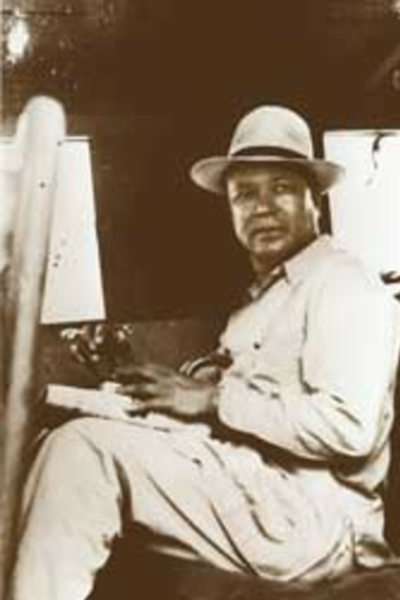
A young Ambedkar during his Columbia University days. Wikimedia Commons.
Young Ambedkar’s emerging academic understanding of caste was helping him give systematic expression to his many prior years of the lived experience of systemic caste prejudice. Alongside and as impetus to this were also his widening experiences regarding issues of race, class and gender. To some extent, this new exposure was a result of his coursework at Columbia. But much of this exposure came more concretely, from treading the streets of upper Manhattan and Harlem.
Describing his usual New York day, Ambedkar emphasized that the vast majority of his time, some 18 hours daily, was spent on campus, either attending lectures and seminars, or otherwise working in Columbia University’s magnificent and exceptionally-stocked Low Library. But he often ate off of campus, opting to eat only one meal per day to save both time and money. For food he spent on average $1.10 daily, which would buy him a cup of coffee, two muffins, and either a meat or a fish dish. He was on a tight budget. New York City living was not cheap, and he had to send money home to his family as well. But that was not all. His voracious reading habit, that had been cultivated in young Ambedkar within the shadow thrown by the Bombay-gothic tower of Elphinstone, had only grown stronger atop the grand staircase of the Roman-neoclassical library of Columbia. Ambedkar was now in the first stage of what would turn out to be a life-long obsession with collecting books. He spent all the leisure time that he had browsing Manhattan’s numerous second-hand book shops and sidewalk stalls, amassing a personal library of some 2000 volumes during his three-year stay.
The quest for books led young Ambedkar out of upper Manhattan down to 42nd street on Fifth Avenue, where the imposing beaux-arts styled New York Public Library had recently opened its doors, and opened them to all – including to black people and to women. So impressed was Ambedkar with the public library that upon learning of the death of Sir Pherozeshah Mehta in Bombay, and the Bombay municipality’s plan to prominently erect his statue, Ambedkar shot off a provocative letter from New York to the Bombay Chronicle, the English-language weekly that Mehta had himself launched in 1910. Ambedkar, fresh from another inspiring visit to the New York Public Library, argued in his letter that erecting a public library in Bombay instead of a ‘trivial and unbecoming’ statue would be a far better tribute to the memory of this great man:
It is unfortunate that we have not as yet realized the value of the library as an institution in the growth and advancement of a society. But this is not the place to dilate upon its virtues. That an enlightened public as that of Bombay should have suffered so long to be without an up-to-date public library is nothing short of disgrace and the earlier we make amends for it the better. There are some private libraries in Bombay operating independently by themselves. If these ill-managed concerns be mobilized into one building, built out of the Sir P.M. Mehta memorial fund and called after him, the city of Bombay shall have achieved both these purposes.
It is unfortunate that we have not as yet realized the value of the library as an institution in the growth and advancement of a society. But this is not the place to dilate upon its virtues. That an enlightened public as that of Bombay should have suffered so long to be without an up-to-date public library is nothing short of disgrace and the earlier we make amends for it the better. There are some private libraries in Bombay operating independently by themselves. If these ill-managed concerns be mobilized into one building, built out of the Sir P.M. Mehta memorial fund and called after him, the city of Bombay shall have achieved both these purposes.
The week following Pherozeshah Mehta’s death in Bombay, Booker T. Washington died in Tuskegee, Alabama. Washington, who had been born into slavery, was the most prominent Southern black activist of his day. As Principal of the Tuskegee Institute and author of a best-selling autobiography, Up From Slavery, Washington’s work and writings would have been well known to Ambedkar. Indeed, he would have heard his name prior to reaching America given that his patron, Maharaja Sayajirao Gaikwad, had long before taken to referring to the great social reformer Jotirao Phule, author of Gulamgiri (or, Slavery) as ‘India’s Booker T. Washington’.
The streets of upper Manhattan were beginning to buzz with a new black consciousness that expressed itself not only socio-politically – as for example with the writings and activism of W.E.B. DuBois and the National Negro Committee (which would soon become the NAACP) – but also aesthetically, with emerging literary, theatrical and musical innovations that would set the stage for the later Harlem Renaissance.
Besides his letter to the Bombay Chronicle, Ambedkar sent off numerous letters to family and friends in India during his stay in New York. The letters show that Ambedkar was as attuned to issues regarding gender as he was to those regarding race. One worth mentioning was addressed to a friend of his father, a retired Jamedar of the Indian army, also from the Mahar caste. In it, he implored the recipient – who was the father of a young girl gaining notoriety for having made it all the way to 4th standard in school, unheard of for a Mahar girl – to preach the idea of education to anyone from their community who was willing to listen to him. Ambedkar wrote that he should continue the education of his daughter, and that the entire community would progress more quickly if males and females were educated side-by-side, with no difference between them.
This letter, too, can be seen to reflect the environment Ambedkar now found himself in. For, alongside the emergence of a new black consciousness, New York City was also buzzing with the tireless activism of suffragists demanding the enfranchisement of women in America. And some of the most dynamic of these suffragists were young Ambedkar’s fellow Columbia classmates – and some, as luck would have it, turned out to be his favourite professors.
This letter, too, can be seen to reflect the environment Ambedkar now found himself in. For, alongside the emergence of a new black consciousness, New York City was also buzzing with the tireless activism of suffragists demanding the enfranchisement of women in America. And some of the most dynamic of these suffragists were young Ambedkar’s fellow Columbia classmates – and some, as luck would have it, turned out to be his favourite professors.
The summer just prior to Ambedkar’s arrival at Columbia, his soon-to-be classmate, Chinese-born Mabel Ping-Hua Lee was one of fifty horse-back suffragettes leading a procession of 10,000 people up Fifth Avenue to Carnegie Hall. Among those marching were Ambedkar’s future philosophy professor John Dewey and his future economics professor Vladimir Simkhovitch. In the spring of 1914, Lee published, in a campus paper, an article entitled ‘The Meaning of Woman Suffrage’, advocating for equality of educational opportunities and the economic liberation of women. In terms identical to those Ambedkar would himself utter frequently in his later speeches, Lee referred to ‘equality of opportunity’ as the essence of ‘democracy’. To her, feminism meant ‘nothing more than the extension of democracy or social justice and equality of opportunities to women’.
Lee, supervised by Simkhovitch, and Ambedkar, supervised by Seligman, were together enrolled in the course leading toward the PhD in economics at Columbia’s Graduate School of Arts and Sciences. Later, Mabel Lee would become the first Chinese woman to earn a doctorate in economics in the United States, just as Ambedkar was one of the first Indians (and certainly the first Dalit) to do so.
Vladimir Simkhovitch, apart from being Lee’s doctoral supervisor, was one of the world’s leading experts in socialist economics and Marxist thought. Ambedkar enrolled in his Econ 114 (Marx and Post-Marxian Socialism), Econ 303 (Seminar on Political Economy), Econ 109 (History of Socialism), Econ 242 (Radicalism and Social Reform), and Econ 119 (Economic History) – that’s five full courses on Marxism and socialism! At least for some of these courses, if not out of wider interest, Ambedkar would have had to have purchased some of Marx’s original writings; books by Marx must have been among the 2000 volumes that he had acquired while in New York. As we will later learn, the vast majority of these 2000 books never made it back with Ambedkar to India. Several of them, such as the writings of John Dewey, Ambedkar subsequently repurchased elsewhere. But curiously, we can find none of Marx’s books among Ambedkar’s extant library. It seems that his later experience with Brahmanical Indian Marxists so soured Ambedkar’s view of Marx that he never even bothered to replace his lost books.

John Dewey (left) and Edwin Seligman (right). Ambedkar’s professors at Columbia University.
One book that Ambedkar purchased in New York that clearly made it with him to India, as apparent from his inscription, was Mrs Rhys Davids’ Buddhism: A Study of the Buddhist Norm (first published in New York in 1912). This book focused on the most ancient, Pali sources of the Buddhist tradition. Ambedkar inscribed the first page in his hand, ‘Columbia Varsity, New York’, and then later on the right-hand side adjacent to it, ‘Bombay, India’. The book and its inscription both show a continuity of his interest in Buddhism, initiated by Dada Keluskar years before.
Of course, Ambedkar’s main focus of study, and the degree toward which he was working, was economics. The study of ancient Buddhism proved useful toward the first iteration of his Master’s thesis, entitled ‘Ancient Indian Commerce’, which may have first been written up as an original research paper for submission as a component of the MA examination. About 75 pages of this manuscript are extant, first covering the trade and commercial relations of ancient India with ancient Egypt, west and east Asia, and then the Greeks and the Romans. Ambedkar strikes a proud, nationalist tone in the work, citing sources to emphasize the superior science, technology and splendours of ancient India over ancient Europe:
It is in the orient, especially in these countries of old civilization, that we must look for industry and riches, for technical ability and artistic productions, as well as for intelligence and science, even before Constantine made [the Roman empire] the centre of political power. Nay, all branches of learning were affected by the spirit of the orient, which was her superior in the extent and precision of its technical knowledge, as well as in the inventive genius and ability of its workman.
It is in the orient, especially in these countries of old civilization, that we must look for industry and riches, for technical ability and artistic productions, as well as for intelligence and science, even before Constantine made [the Roman empire] the centre of political power. Nay, all branches of learning were affected by the spirit of the orient, which was her superior in the extent and precision of its technical knowledge, as well as in the inventive genius and ability of its workman.
Remember that Ambedkar was by now thoroughly familiar with the political, economic, and intellectual history of classical Europe and Ancient Rome, so his claims regarding ancient India’s technical superiority were not merely rhetorical.
‘Ancient Indian Commerce’ then goes on to treat of India’s commercial relations in the Middle Ages, covering industry, trade and commerce throughout the rise of Islam and the expansion of western Europe. The next couple of chapters are missing, and the extant thesis ends with a chapter entitled ‘India on the Eve of the Crown Government’. In this chapter, too, Ambedkar exhibits a fierce nationalism, excoriating British imperialism and taking to task historians of British India who misrepresent the achievements of India prior to the arrival of the British: ‘Not only have they been loud in their denunciation of the Moghul and the Maratha rulers as despots and brigands, they cast slur on the morale of the entire population and their civilization’. What follows are 20 pages of argument and evidence, replete with tables, graphs and charts, of how India systematically contributed to the prosperity of Britain, while itself consistently degenerated, being beaten down and sucked dry.
This tour-de-force of Indian nationalist commercial and economic history then concludes with these damning words:
The supplanters of the Moghuls and the Marathas were persons with no better moral fiber, and the economic condition of India under the so-called native despots was better than what it was under the rule of those who boasted being of superior culture. It is with industries ruined, agriculture overstocked and overtaxed, with productivity too low to bear the high taxes, and with few avenues for display of native capacities, the people of India passed from the rule of the Company to the rule of the Crown.
The supplanters of the Moghuls and the Marathas were persons with no better moral fiber, and the economic condition of India under the so-called native despots was better than what it was under the rule of those who boasted being of superior culture. It is with industries ruined, agriculture overstocked and overtaxed, with productivity too low to bear the high taxes, and with few avenues for display of native capacities, that the people of India passed from the rule of the Company to the rule of the Crown.
American academia was far more accommodating of this magnitude of critique of British imperialism than either British or Indian universities were. Nevertheless, for reasons still unknown to us, Ambedkar abandoned the topic of ancient Indian commerce as his MA thesis, and instead drafted and submitted a much more technical, scope-limited, and positivist text entitled ‘Administration and Finance of the East India Company’. The most likely explanation is that Professor Edwin Seligman had been assigned as Ambedkar’s supervisor, and Seligman was a no-nonsense, technical economist, who viewed the subject of economics as a fact-based, impartial ‘science’. Seligman taught Ambedkar ‘the Science of Finance’, and was averse to the introduction of subjective viewpoints. As Seligman would write 10 years later in a Preface to Ambedkar’s published Ph.D., ‘The value of Mr. Ambedkar’s contribution to this discussion lies in the objective recitation of the facts and the impartial analysis…’.
The officially-submitted thesis, at only 45 pages in length, avoided speaking of history at all (the opening line reads: ‘Without going into the historical development of it…’), and was more restrained in claims regarding the systematic cultural destruction and impoverishment of India by the British. Nevertheless, in the end, Ambedkar exhibits the irrepressibility of his innate need to call out injustice, and closes the thesis with these reproaching words:
It remains, however, to estimate the contribution of England to India. Apparently the immenseness of India’s contribution to England is as astounding as the nothingness of England’s contribution to India….England has added nothing to the stock of gold and silver in India; on the contrary, she has depleted India—‘the sink of the world’.
It remains, however, to estimate the contribution of England to India. Apparently the immenseness of India’s contribution to England is as astounding as the nothingness of England’s contribution to India… England has added nothing to the stock of gold and silver in India; on the contrary, she has depleted India—‘the sink of the world’.
The thesis was accepted by Seligman and passed, and on 02 June 1915 Ambedkar was awarded the degree of Master of Arts in Economics. He had completed the requisite 30 credit hours for the M.A., but 60 credit hours were required for a doctorate. He thus continued in his coursework and in his research and writing, and from that point on, all the credits were counted toward the completion of his Ph.D.
Ambedkar continued working on the ‘science of finance’ as the subject of his doctoral dissertation under Seligman at Columbia. The tentative title for his Ph.D. thesis was ‘The National Dividend of India’, a historical and analytical study of Indian finance. But interestingly, following the award of his M.A. in economics, nearly every course that Ambedkar enrolled in as credit toward his Ph.D. in economics were non-econ courses. After the summer of 1915, Ambedkar took only one economics course (econ 183, on Railways); all of the rest were in languages (French and German), History (4 courses), Philosophy (4 courses), Politics (1 course), and Anthropology (4 courses).
All four of these Anthro courses were taught by Alexander Goldenweiser, himself a student of Franz Boas, the ‘father of American anthropology’. Boas also taught Anthropology at Columbia, in fact he co-taught a course with his friend John Dewey during the same semester that Ambedkar was attending Dewey’s philosophy course. In short, there is no doubt that young Ambedkar was exposed to the modern anthropological method of Boas. One of the primary features of Boas’ approach was his flat rejection of racial typologies which were so popular in late 19th-century anthropology. These racialist theories attributed fixed mental and physical characteristics to specific races. Boas (and indeed Dewey and Goldenweiser) rejected race as the dominant characteristic of a peoples and emphasized far more malleable and conditional characteristics such as culture, history and psychology instead.

Dr. BR Ambedkar presiding over the joint Columbia Bicentennial – American Alumni Banquet at National Sports Club of India, New Delhi, October 30, 1954. Columbia University.
In May 1916, Ambedkar wrote an extensive and innovative research paper for one of Goldenweiser’s general ethnology courses, where the influence of Boas’ ideas against racial fixity is clear. In addition to opposing a basic Marxist tenet about class antagonism that Ambedkar learned from Simkhovitch’s courses, also discernable within the paper are many echoes of Ambedkar’s everyday experiences regarding race and gender from his wanderings away from campus. In the paper, entitled ‘Castes in India: Their Mechanism, Genesis and Development’, Ambedkar argued that caste was a distinct social category that could not be accounted for either by theories of race or by class antagonism. Rejecting the standard explanation of the racial origins of caste popular in colonial ethnography (i.e. a consequence of Aryan invasions wherein the darker-skinned earlier inhabitants were subjugated) and rejecting the dominant sociological claim that caste was maintained through a hierarchy of purity and pollution, Ambedkar boldly asserted that the essence of caste was the control of women’s sexuality – foremost, the practice of endogamy.
In the paper, entitled ‘Castes in India: Their Mechanism, Genesis and Development’, Ambedkar argued that caste was a distinct social category that could not be accounted for either by theories of race or by class antagonism. Rejecting the standard explanation of the racial origins of caste popular in colonial ethnography (i.e. a consequence of Aryan invasions wherein the darker-skinned earlier inhabitants were subjugated) and rejecting the dominant sociological claim that caste was maintained through a hierarchy of purity and pollution, Ambedkar boldly asserted that the essence of caste was the control of women’s sexuality – foremost, the practice of endogamy.
Ambedkar was exceptionally proud of the work. A year later, it became his first scholarly publication, appearing in the professional journal The Indian Antiquary. Later, when publishing his Ph.D. dissertation as a book, he is described on the title page as the ‘author of Castes in India’. Years later, in 1944, when he was publishing a third edition of his explosive essay Annihilation of Caste, he revealed that the third edition had been delayed for so long after the print run of the 1937 second edition was exhausted because he had been trying to find the time to recast Annihilation of Caste ‘so as to incorporate into it another essay of mine called Castes in India’. Indeed, even Ambedkar’s latest writings from the 1950s, when he was nearing the end of his life, referenced assertions that he had first posited as a young doctoral candidate at Columbia.
In many ways, Ambedkar’s ‘Caste’ paper captured everything other than ‘the science of finance’ that Ambedkar had learned and discovered, both on and off campus, during his three formative years in New York. The formal structure of this rich education was giving shape to his profound lived experiences being Dalit – all of those childhood experiences that he had written about in his autobiographical fragments, Waiting for a Visa – forging an uncommon and unprecedented concatenation of events that helped to make Ambedkar the extraordinary person that he was.
This excerpt has been reproduced with permission from Aakash Singh Rathore from the book Becoming Babasaheb: The Life and Times of Bhimrao Ramji Ambedkar: Birth to Mahad (1891-1929) written by Aakash Singh Rathore. All rights reserved. Unauthorised copying is strictly prohibited. You can buy the book here.

ARCHIVE
Contesting Power – Contesting Memories: the Obelisk at Koregaon
The obelisk at Koregaon is characterised by a surprising commemorative history. A memorial to a bloody encounter within an imperial war, this monument provides a case study which illustrates that contestations of memories often bear the imprint of contestations for hegemony that are played out in the present.
The obelisk at Koregaon in Western India, built as a demonstration of empire builders’ belief in their own power and military prowess, serves a similar function today, but for a different group of people: the former Untouchables who had collaborated with the colonizers against what they perceived as a tyrannical indigenous regime.
The recently emerged tradition of an annual pilgrimage to the memorial, should be seen as an effort at creating and popularizing an alternative culture of the former Untouchables, now known as Neo-Buddhists. While Indian society grapples with the problem of accepting the equality of its various castes, one can witness different pathologies of memory surrounding the monument. Today, both amnesia and pseudomnesia are associated with the Koregaon memorial, defying the locus of a person in the discourse on social justice in present-day India. The memorial had faded into oblivion from British public memory long before the end of the imperial rule. However, it has undergone a metamorphosis of commemoration and now signifies something quite different from what was originally intended.
The Battle of Koregaon and its Memorial
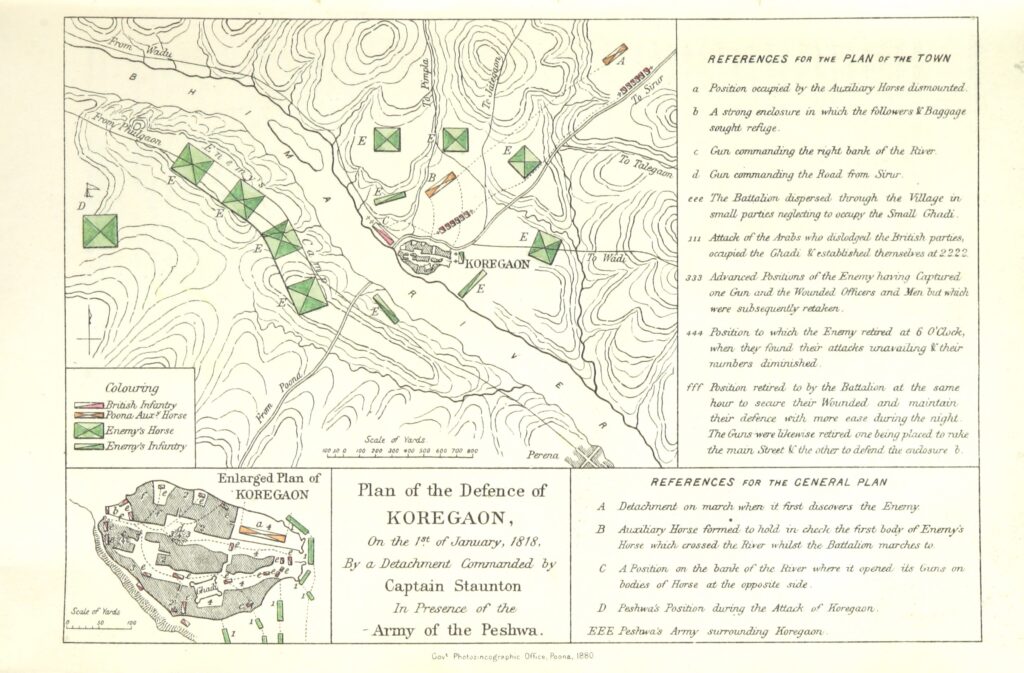
British defence plan during the Battle of Koregaon from Gazetteer of the Bombay Presidency (Ed). Sir James M. Campbell, p. 259. Published in 1896. British Library.
The political ascendancy of the British East India Company in Eastern and Northern parts of India dates back to the battle of Plassey in 1757. From then on it gradually began extending its political hold to the other parts of India. During the same period, from their base in Pune in Western India, the Peshwa rulers (1707-1818) were also extending their political influence. Clashes between the Peshwas and the Company seemed inevitable. On 1 January 1818, a battalion of about 900 Company soldiers, led by F. F. Staunton from Seroor to Pune, suddenly faced a 20,000-strong army commanded by the Peshwa himself. The encounter took place at the village of Koregaon on the banks of the river Bheema. In the words of Grant Duff, a contemporary official and historian, “Captain Staunton was destitute of provisions, and this detachment, already fatigued from want of rest and a long night march, now, under a burning sun, without food or water, began a struggle as trying as ever was maintained by the British in India.” The battle was not decisively won by either side, but in spite of heavy casualties, Staunton’s outnumbered troops managed to recover their guns and carry the wounded officers and men back to Seroor.
As it was one of the last battles of the Anglo-Maratha wars, which ended with a complete victory of the Company, the encounter quickly came to be remembered as a triumph. The East India Company wasted no time in showering recognition on its soldiers.
While Staunton was promoted to the honorary post of aide de camp by the Governor General, the battle received special mention in Parliamentary debates next year. A memorial was commissioned and a year later, Lt Col Delamin, who was passing by the village, could already witness the construction of a 60-foot commemorative obelisk.
The Koregaon memorial still stands intact today. It is supposed to commemorate the British and Indian soldiers who ‘defended the village with so much success’ when the British East India Company confronted the Peshwa army in a ‘desperate engagement’. Marble plaques adorn the four sides of the obelisk. The two plaques in English are accompanied by translations into the local Marathi language. The Memorial Plaque declares that the obelisk is meant to commemorate the defence of Koregaon wherein Captain Staunton and his corps “accomplished one of the proudest triumphs of the British army in the East.” Soon after, the word ‘Corregaum’ and the obelisk were chosen to adorn the official insignia of the Regiment. In the Parliamentary debates in March 1819, the events were described as follows. “In the end, they not only secured an unmolested retreat, but they carried off their wounded!” In his volume published in 1844, Charles MacFarlane quotes from an official report to the Governor calling the engagement “one of the most brilliant affairs ever achieved by any army in which the European and Native soldiers displayed the most noble devotion and the most romantic bravery.” Twenty years later, Henry Morris confidently added: “Captain Staunton returned to Seroor, which he entered with colours flying and drums beating, after one of the most gallant actions ever fought by the English in India.” Later chroniclers of colonial rule continued to shower praise on the plucky Company force for displaying “the most noble devotion and most romantic bravery under the pressure of thirst and hunger almost beyond human endurance.” In 1885, even the ‘Grey River Argus’, a newspaper published in far-off New Zealand, described the battle in glowing terms. After the turn of the century, though, the colonial commemoration began to fade and gradually the event slipped from Britain’s public memory. The battle is now only mentioned in specialized literature on military history as an example not of British martial capabilities, but of that of the Sepoys.
Memories: ‘Ours’ and ‘Theirs’
Today the memorial finds itself just off a busy highway toll booth – a common site in the post-globalisation Indian landscape. Every New Year Day, the urban middle classes who need to use the highway, remind each other to avoid the particular stretch of the highway that passes by the memorial. Their reason for doing so is that “those people would be swarming their site at Koregaon.” Indeed, the memorial has become a site of pilgrimage attracting thousands of people who gather there every 1 January. If one asks the pilgrims what brings them together, there is a clear answer.
“We are here to remember that our Mahar forefathers fought bravely and brought down the unjust Peshwa rule. Dr Ambedkar has started this pilgrimage. He asked us to fight injustice. We have come to take inspiration from the brave soldiers and Dr Ambedkar’s memories.”
Initially, one might be baffled by this admiration for the native soldiers who fought on the British side and lost their lives in a fight against their own countrymen. A careful scrutiny of the list of casualties inscribed on the memorial reveals, however, that twenty-two names from amongst the native casualties listed end with the suffix “-nac”: Essnac, Rynac, Gunnac. The suffix ‘-nac’ was used exclusively by the untouchables of the Mahar caste who served as soldiers. This observation becomes particularly relevant when considered within the context of the caste profile of the Peshwas, who were orthodox and high-caste Brahmin rulers. The story of Koregaon is thus not just about a straightforward struggle between a colonial and a native power. There is another important but largely ignored dimension to it: caste.

Peshwa Bajirao II, who fought at the Battle of Koregaon. Coloured lithograph, Chitrashala Press, Poona, 1888. Wellcome Collection.
The Peshwas, Brahmin rulers of Western India, were infamous for their high caste orthodoxy and their persecution of the untouchables. Numerous sources document in great detail that under the Peshwa rulers, the ‘untouchable’ people who were born in certain so-called low castes were given harsher punishments than high-caste people for the same crimes. They were forbidden to move in public spaces in the mornings and evenings lest their long shadows defile high-caste people on the streets. Besides physical mobility, occupational and social mobility were also denied to these people who formed a major part of the population. Human sacrifices of ‘untouchable’ people were not uncommon under these eighteenth century rulers who had framed elaborate rules and mechanisms to ensure that the untouchables stayed just as their name suggests – untouchable. In 1855, Mukta Salave, a 15-year-old girl from the untouchable Mang caste who attended the first native school for girls in Pune, wrote an animated piece about the atrocities faced by her caste:
‘Let that religion, where only one person is privileged and the rest are deprived, perish from the earth and let it never enter our minds to be proud of such a religion. These people drove us, the poor mangs and mahars, away from our own lands, which they occupied to build large mansions. And that was not all. They regularly used to make the mangs and mahars drink oil mixed with red lead and then buried them in the foundations of their mansions, thus wiping out generation after generation of these poor people. Under Bajirao’s rule, if any mang or mahar happened to pass in front of the gymnasium, they cut off his head and used it to play “bat ball,” with their swords as bats and his head as a ball, on the grounds.’
Peshwa atrocities against the low-caste people have remained ingrained in public memory to this very day.
When the East India Company began recruiting soldiers for the Bombay Army, the untouchables seized the opportunity and enlisted. Military service was perceived as a means to opening the doors of economic as well as social emancipation. Political freedom and nationalism had little meaning for a population who had to choose between a life where the best meal on offer was a dead buffalo in the village and a life where their human dignity was respected – not to mention a decent monthly payment in cash.
While the untouchable soldiers fought on the British side against their own countrymen, the valour they showed is not at all perceived as a shameful memory today. In fact, Koregaon has become an iconic site for the former untouchables as it serves as a reminder of the bravery and strength shown by their ancestors – the very virtues that the caste system claimed they lacked. The memories related to the Koregaon memorial, help to explain how a memorial of colonial victory built in the early nineteenth century has been adapted to serve as a site that gives inspiration to the formerly untouchable people of India.
Mahars and the Military
Throughout much of the nineteenth century, the battle of Koregaon and the memorial were warmly remembered amongst military, imperial and political circles in Britain. At the beginning of the twentieth century, though, British rule was firmly established all over India, and the Koregaon Memorial faded from mainstream commemorative practices. Neither Britain at the height of colonial glory, nor India, which was beginning to receive small doses of independence, had time to commemorate the violent struggle of the days of the Honourable Company. Other lines of tradition were broken, too. The Mahar regiment had continued to demonstrate its bravery and loyalty in the battles of Kathiawad (1826) and Multan (1846). But then, in spite of the low castes’ long-standing military alliance with the British, some Sepoys from the Mahar Regiment, which formed a part of the Bombay Army, joined the “Indian Mutiny” in 1857. This added to a certain reluctance the British had always shown at the enlistment of Mahars. Subsequently, they were declared to be a non-martial race and their recruitment was stopped in May 1892.
Once their recruitment was discontinued, the Mahars soon began to feel the pinch. Gopal Baba Valangkar, a retired army-man founded a ‘Society for Removing the Problems of Non-Aryans.’ In 1894 the members of this society sent a petition to the Governor of Bombay to remind him that the Mahars had fought for the British to acquire their present dominion over India and requested a reconsideration of the decision to exclude Mahars from the Martial races, which deprived them of entry into the military service. The petition was rejected in 1896.
Another leader of the untouchables, Shivram Janba Kamble made an even more sustained effort to achieve the emancipation of the Untouchables. He had been involved in the work of the ‘Depressed Classes Mission’ which ran schools for untouchable children. In October 1910, R. A. Lamb of the Bombay Governor’s Executive Council was invited as the chief guest for a prize-giving ceremony in one of these schools. In his speech, Lamb mentioned his annual visits to the Koregaon Memorial. He drew attention to the ‘many names of Mahars who fell wounded or dead fighting bravely side by side with Europeans and with Indians who were not outcastes’ and regretted that ‘one avenue to honourable work had been closed to these people.’ It is not known whether it was Lamb’s speech that put the Koregaon Memorial back into the limelight or whether it had remained in living memory.
His words certainly lent weight to the argument that it was the Mahars who fought for the British and made them ‘masters of Poona.’
Within the first two decades of the twentieth century, Kamble organised a number of meetings of the Mahar people at the memorial site. In 1910, he arranged a grand Conference of the Deccan Mahars from 51 villages in Western India. The Conference sent an appeal to the Secretary of State demanding their ‘inalienable rights as British subjects from the British Government.’ They made a strong case for letting Mahars re-enter the army and argued that the Mahars were ‘not essentially inferior to any of our Indian fellow-subjects.’ Up until 1916 this request was repeated by various gatherings of untouchables in Western India. As the First World War gathered momentum, the Bombay government eventually issued orders in 1917 providing for the formation of two platoons of Mahars.
The Coming of Ambedkar
The happiness of the Mahars was, however, short-lived. Recruitment was stopped as soon as the war ended. This led to a renewed campaign for recognizing the valour of the Untouchables. By then, the demand had long since assumed the level of a movement for the general emancipation of the Untouchables. Within this campaign the Koregaon Memorial had become a focal point. Various meetings were held at the obelisk during which Kamble and other leaders invariably reminded the Untouchables of the valour and prowess exhibited by their forefathers. On the anniversary of the Koregaon battle on 1 January 1927, Kamble invited Dr Bhimrao Ramji Ambedkar to address the gathering of Untouchables. Ambedkar was not merely another leader of the untouchables. He was by now, as far as Indian politics was concerned, a force to be reckoned with.
Ambedkar was born in 1891, the son of a retired army subhedar from the Mahar caste. In spite of his first-hand experience of caste-based discrimination, he attained a doctorate from Columbia University, a D. Sc. from London School of Economics and was called to the Bar at Gray’s Inn by the age of 32. In 1926, he became a member of the Bombay Legislative Assembly.
He could not fail to appreciate the significance of the memorial for advancing the cause of the emancipation of the Untouchables. Not only did he make an inspiring speech at the gathering, he also supported the idea of reviving the memory of the valour of the forefathers by an annual pilgrimage to the site on the anniversary of the battle.
As a representative of the Untouchables, he was invited by the British to the Round Table Conference in 1931 where the future of the Indian Nation was to be decided. Based on his arguments at the conference, he wrote a small treatise called The Untouchables and the Pax Britannica in which he referred to the Koregaon battle to support his argument that the Untouchables had been instrumental in the establishment and consolidation of British power in India.
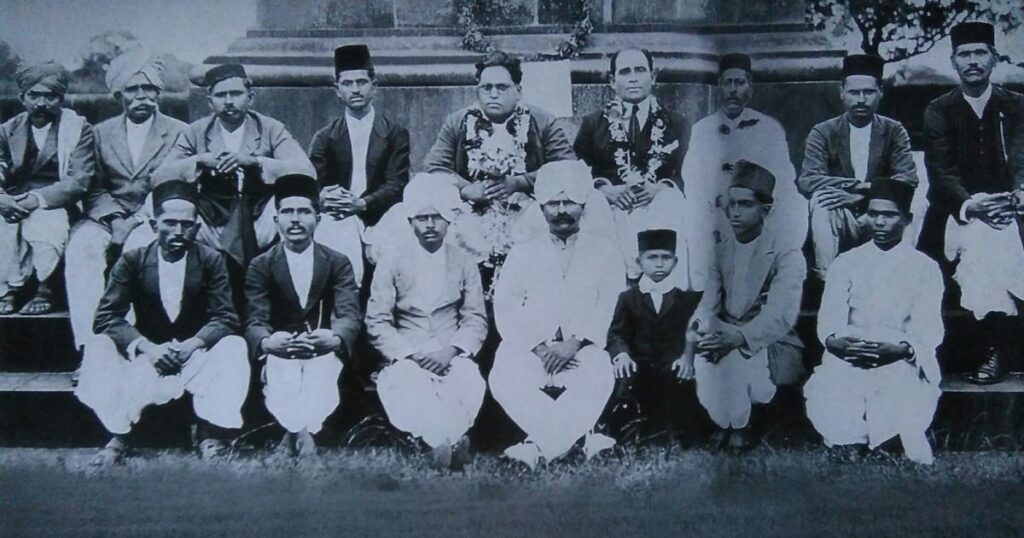
BR Ambedkar and his followers at the Koregaon victory pillar on 28 December 1927. Wikimedia Commons.
Indian mainstream politics from the 1920s until 1947 is recognised as the Gandhian era. Gandhi, having been born in the middle order caste of traders, had a different outlook on the systemic exploitation of the Untouchables on the basis of caste. He called the Untouchables Harijans, meaning people of God. Ambedkar and his followers resented both this name and the patronising attitude behind it. Underlying this surface issue, there were major ideological differences between Ambedkar and Gandhi. For the India represented by Gandhi and the Indian National Congress, the primary contradiction was that between colonial supremacy and Indians’ aspirations for political freedom. For Ambedkar and the Untouchable masses he represented, the oppression was not primarily located in the political system but arose from the socio-economic sphere. There was a clash of interests. The Indian National Congress under Gandhi sought to represent all Indians in a unified front against the colonial rule. Although Ambedkar was, unlike some “sections of Dalits and non-Brahmans who believed that colonial rule had been an unambiguous liberating force”, by no means a staunch supporter of British rule, he had quite a different new India in mind. While Gandhi saw the ideal social order arising from a reformed Hinduism, Ambedkar sought “political representation independent of the Hindu community.” In 1930, Gandhi embarked upon the Civil Disobedience Movement against the systems and institutions of the colonial rule. Kamble and a few other representatives of the depressed classes retaliated by launching what they called the “Indian National Anti-Revolutionary Party”. Its manifesto was quoted in The Bombay Chronicle:
In view of the fact that Mr Gandhi, Dictator of the Indian National Congress has declared a civil disobedience movement before doing his utmost to secure temple entry for the “depressed” classes and the complete removal of “untouchability”, it has been decided to organise the Indian National Anti-Revolutionary Party in order to persuade Gandhiji and his followers to postpone their civil disobedience agitation and to join whole-heartedly the Anti-Untouchability movement as it is… the root cause of India’s downfall…. The Party will regard British rule as absolutely necessary until the complete removal of untouchability…
Though this party did not attract much support in mainstream politics, it demonstrates that for the Untouchables, social and economic well-being was of greater and more immediate concern than political freedom, and hence colonial rule was regarded as a possibly necessary evil for the time being. It also shows that there were other and often contradictory voices in the independence movement of India. These have often been glossed over in nationalist rhetoric.
A New Memory
India won her independence in 1947, and Ambedkar chaired the committee tasked with the drafting of the new constitution. The ‘annihilation of caste’, however, remained a distant dream. The Hindu Code Bill proposed by Ambedkar in order to bring about extensive reforms in the Hindu socio-cultural scene was not accepted by parliament. In 1951 a disillusioned Ambedkar resigned from the Cabinet. Five years later, under his leadership, millions of Untouchables converted en masse to Buddhism in a step towards attaining total freedom from exploitation. The same year, after Ambedkar’s death, a political party, called the Republican Party of India, was formed to represent the interests of the low-caste people.
The conversion opened the floodgates for cultural conflicts with the high castes. The immediate reaction of the Hindu right was one of denial. The strategy of cultural appropriation that has worked so well for Hinduism from the times of the Buddha is employed even today to project the Buddhists as just another sect within Hinduism.
For the neo-Buddhists, this necessitated the creation of new and different cultural practices. Amongst the neo-Buddhists in western India one of the invented cultural practices that emerged as a result is the pilgrimage to the Koregaon Memorial. Thousands of neo-Buddhists throng to the memorial every New Year’s Day to commemorate the valour of the Mahars who helped to overthrow the high caste rule of the Peshwa. They also commemorate the visit of their leader, Dr. Ambedkar, on 1st January 1927.
Unlike any Hindu pilgrimage site, the Koregaon memorial is devoid of the tell-tale signs of a holy marketplace. No sellers of garlands and sweets and images of Gods are to be found here. It is a deserted place all through the year. However, come New Year, the place is dotted with little stalls selling books, cassettes and compact disks. Various publishers of Ambedkarite literature set up their stalls of books. Neo-Buddhist songs are played loudly in the stalls extolling the greatness of Ambedkar and emphasizing the need to change the world. Leaders of the now numerous factions of the Republican Party of India address their followers. Neo-Buddhist families visit the memorial obelisk. They offer flowers or light candles. An important part of the ritual is to offer a Vandana, a recital of verses from Buddhist texts.
An equally important element of their ritualised behaviour is the buying of books. Interviews with various booksellers have shown a surprising fact: whenever there is a gathering or a pilgrimage of the neo-Buddhists, the bookstalls do roaring business. It may be interesting to note that the average length of books sold at these stalls is short – volumes of 30-70 pages priced between 10 to 50 rupees. It might be an indication of the fact that the readers may be neo-literate, have very little time to spend on reading and can only afford cheaper books. Many publishers of related literature have indicated that their daily sales figures at the Koregaon pilgrimage and other such important pilgrimages (eg. Mumbai and Nagpur) often exceed their sales figures for the rest of the year. It could be perceived as an indication of the belief in emancipatory potential of education among the neo-Buddhists, especially of the former Mahar caste. Some of the best-selling titles include Marathi translations of books authored by Ambedkar himself, eg. Buddha and His Dhamma, Annihilation of Caste, Who Were the Shudras? Other popular books include Dalit autobiographies. They also sell Dalit poetry and small biographies of Dalit leaders.
These books offer a Dalit perspective on Indian history wherein colonial rule is portrayed as instrumental for emancipation, even though it remained ignorant of realities of caste exploitation. Jotirao Phule and Ambedkar are among the prominent Dalit writers who propounded this view of the colonial rule in which Gandhi and the movement for India’s independence do not figure very positively. The fact that Ambedkar chaired the Committee that created the Indian Constitution in 1950, however, is considered supremely important. Any attempt to criticise or seek a change in the Indian Constitution, therefore, provokes fierce opposition from the Dalit population. The anti-corruption movement led by Anna Hazare and his team in 2011 is a recent example. The extra-constitutional structure to create a powerful ombudsman (Lokpal) for resolving the issues of corruption was not welcomed by Dalit leaders and public.
The Importance of Forgetting
Though the Koregaon Memorial was constructed by the Colonial rulers, it does not feature on the commemorative landscape of today’s British public. This amnesia might be attributed to the fact that the colonial memories, especially of violent battles are no longer the object of pride in present-day Britain. This amnesia is matched by the high castes in India. Poona, the capital of Peshwas has become a software and education city called Pune. When a sample of 130 members of the high caste, newly rich people (who have come to be nicknamed as Computer Coolies) were asked about the Koregaon memorial, none of them knew what it was.
Elite amnesia is not total, though. There are also, what may be called conflicting memories. During the 1970s the Western Indian state of Maharashtra witnessed a spate of popular (a)historical novels topping the best-seller lists in Marathi. Many of them dominate the historical understanding and perceptions of the Marathi-speaking middle classes even today. Two important novels from this genre, both authored by Brahmins, describe the battle of Koregaon in passing. Mantravegla by N. S. Inamdar is based on the life of the Last Peshwa. It claims that the battle was, in fact, won by the Peshwas. Recently, this trend of creating alternative memories about the Peshwa battles has become even stronger. The battle of Panipat, which saw a complete defeat of the Peshwa armies in 1761, is commemorated today by high-sounding rallies. The kind of rhetoric used during these rallies suggests that it was the Peshwa who won the battle.
The Koregaon Memorial occupies a very significant place in today’s neo-Buddhist culture. The internet and other electronic media are used to document and commemorate the Koregaon battle and Ambedkar’s visit to it. An image search for Koregaon Pillar yields hundreds of digital pictures of the Memorial Obelisk. Film clips are available on Youtube. At least a dozen blogs in English and Marathi have entries related to the Koregaon memorial. They describe the battle and the role of the Mahar soldiers and also remind the readers about what the Untouchables could achieve if they show the resolve.
Conclusion
The obelisk of Koregaon Bheema is thus a site which has generated conflicting memories. These memories represent the divergent interests of the groups involved in their creation. Those wishing to commemorate the greatness of the Peshwa rule – the symbol of high caste supremacy – either choose to ignore the Koregaon battle, or create a Pseudomnesia of Peshwa victory. While the obelisk marks an imperial site of memory that is largely forgotten in the homeland of the empire, the monument has undergone a metamorphosis of commemoration in Western India.
It no longer reminds the public of imperial power, but for the former Untouchables whose forefathers fought at Koregaon it serves the purpose of providing “historical evidence” of the ability of the Untouchables to overthrow the high caste oppression.
Considering the fact that Indian society is still dominated by the system of caste hierarchy, the Koregaon Memorial is also a reminder that present-day contestation for hegemony is often manifested in contesting memories.
This paper has been carried out courtesy with the permission of Shraddha Kumbhojkar. It has been presented without its abstract, citations, footnotes and bibliography for purposes of easier reading.
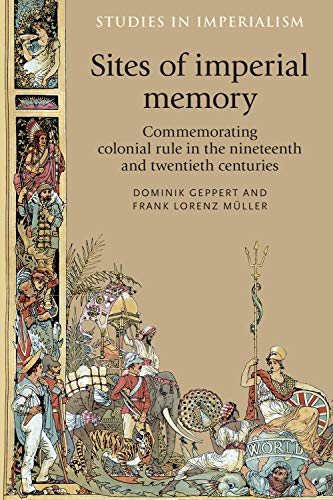
The paper has also been published in Sites of Imperial Memory, (ed.) Dominik Geppert, Frank Lorenz Muller, Manchester University Press, Manchester, New York, 2015. as Politics, Caste and the remembrance of the Raj: the Obelisk at Koregaon. You can buy the book here.
ARCHIVE
19th December 1946
Sir, the mover and the seconder have indicated how the disposition, the distribution has been made in this Advisory Committee. This is a matter of life and death for the tribal people in particular. I congratulate the Indian National Congress leaders; I congratulate also those minority communities who have been able to get more seats than are due to them numerically. That cannot be denied. Number for number, the Sikhs, the Christians, the Anglo-Indians and the Parsis have been given more than is their due. I do not grudge them all this; but, the fact remains that they have been given many more seats than is their due, whereas when we come to my people, the real and most ancient people of this country, the position is different. But I do not grumble. For my purpose, it would be quite enough to have Panditji only; but he is not a member. I would entrust the future of every tribal people in this country, in the hands of Pandit Jawaharlal Nehru, and rather be not there myself. Let me assure you, that we are not dependent on numbers – the number of votes that will be given in the Advisory Committee. We have been inarticulate. I led no deputation to Sardar Patel, or to you, Mr. President, about our rights, about our claims and about our dues. I leave it to the good sense of the House and of the Advisory Committee, that, a long, last, they will right the injuries of six thousand years. In another place, once when I said that a particular group of our Indian nation had been heavily weighted, my remarks were resented by that particular group, I tell you that it does not worry us at all if the Sikhs get 60 seats in this particular Advisory Committee, or anywhere else. I congratulate them.
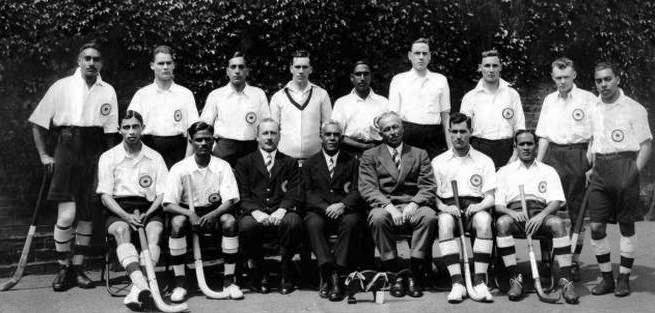
Jaipal Singh Munda and the St. John’s College hockey team.
We thank the Indian National Congress for saying that the minority question cannot be over-rated as Pandit Govind Ballabh Pant said. But has it been over-rated as far as the tribals are concerned? Can it be honestly said that you have in any way over-rated their position? I am not pleading for any more seats; I have not submitted any amendment, I am not moving any amendment, but I must draw the attention of this House and of this country, if I may say so, that here we are all on trial. Hitherto it has been very easy for us to say it is the British – it is the British who have kept you in a zoo by making for you Partially Excluded Areas and Excluded Areas. Are you behaving any differently? I ask this question. I ask the Advisory Committee. I find my own name in it. While I find my own name in it, I am bound to point out that there is no name of any tribal woman in the Advisory Committee. How has that been left out? There is no tribal woman member in the Advisory Committee.
Hitherto it has been very easy for us to say it is the British – it is the British who have kept you in a zoo by making for you Partially Excluded Areas and Excluded Areas. Are you behaving any differently? I ask this question. I ask the Advisory Committee. I find my own name in it. While I find my own name in it, I am bound to point out that there is no name of any tribal woman in the Advisory Committee. How has that been left out?
That never occurred to the people who were responsible for the selection of members of the Committee. I am not saying that she should be included, but it is significant that the thing has not been seriously considered. Similarly, as I repeat thirteen or whatever the figure is that has been fixed – I accept that, I do not say any more, but I do want to expose the ignorance that is exposed in the suggestion of this figure, or for that matter, in the nomination of the Tribal Areas members. Look at the disposition of the tribal population throughout India. I have no quarrel. With the muddling that has been made in the census enumeration at every decennial reckoning, the latest figure is 254 lakhs, I accept that. Now in that we find that the largest tribal group in India are the Munda-speaking tribe. If you add up their 1941 figures, you will find that they are something like 43 lakhs. The next in magnitude are the Gonds. Now we have been given a Gond representative; I am glad there is one. The next come Bhils, 23 lakhs. No Bhil is on this Committee. Like that, we go on to Oraons, with 11 lakhs, there is no Oraon on this Committee. Mr. President, time is valuable. Pandit Jawaharlal Nehru elsewhere said that every day we take it costs something like Rs. 10,000. I think the life of 25 million tribals is worth more than Rs. 10,000 a day. This is an opportunity where I must have my say, if you will permit me. I note also that, for some reason or other, there is no tribal member at all in the Fundamental Rights Committee.
Now in that we find that the largest tribal group in India are the Munda-speaking tribe. If you add up their 1941 figures, you will find that they are something like 43 lakhs. The next in magnitude are the Gonds. Now we have been given a Gond representative; I am glad there is one. The next come Bhils, 23 lakhs. No Bhil is on this Committee. Like that, we go on to Oraons…
24th January, 1947
Mr. Chairman, Sir, I rise to speak on behalf of millions of unknown hordes – yet very important – of unrecognised warriors of freedom, the original people of India who have variously been known as backward tribes, primitive tribes, criminal tribes and everything else, Sir, I am proud to be a Jungli, that is the name by which we are known in my part of the country. Living as we do in the jungles, we know what it means to support this Resolution. On behalf of more than 30 millions of the Adibasis [CHEERS], I support it not merely because it may have been sponsored by a leader of the Indian National Congress. I support it because it is a resolution which gives expression to sentiments that throb in every heart in this country. I have no quarrel with the wording of, this Resolution at all. As a jungli, as an Adibasi, I am not expected to understand the legal intricacies of the Resolution. But my common sense tells me, the common sense of my people tells me that every one of us should march in that road of freedom and fight together. Sir, if there is any group of Indian people that has been shabbily treated it is my people. They have been disgracefully treated, neglected for the last 6,000 years. The history of the Indus Valley civilization, a child of which I am, shows quite clearly that it is the new comers – most of you here are intruders as far as I am concerned – it is the new comers who have driven away my people from the Indus Valley to the jungle fastnesses. This Resolution is not going to teach Adibasis democracy. You cannot teach democracy to the tribal people; you have to learn democratic ways from them. They are the most democratic people on earth. What my people require, Sir, is not adequate safeguards as Pandit Jawahar Lal Nehru has put it. They require protection from Ministers, that is the position today. We do not ask for any special protection. We want to be treated like every other Indian. There is the problem of Hindustan. There is the problem of Pakistan. There is the problem of Adibasis. If we all shout in different militant directions, feel in different ways, we shall end up in Kabarasthan.
The whole history of my people is one of continuous exploitation and dispossession by the non-aboriginals of India punctuated by rebellions and disorder, and yet I take Pandit Jawahar Lal Nehru at his word. I take you all at your word that now we are going to start a new chapter, a new chapter of Independent India where there is equality of opportunity, where no one would be neglected. There is no question of caste in my society. We are all equal. Have we not been casually treated by the Cabinet Mission, more than 30 million people completely ignored? It is only a matter of political widow-dressing that today we find six tribal members in this Constituent Assembly. How is it? What has the Indian National Congress done for our fair representation? Is there going to be any provision in the rules whereby it may be possible to bring in more Adibasis and by Adibasis I mean, Sir, not only men but women also?
Sir, if there is any group of Indian people that has been shabbily treated it is my people. They have been disgracefully treated, neglected for the last 6,000 years. The history of the Indus Valley civilization, a child of which I am, shows quite clearly that it is the new comers – most of you here are intruders as far as I am concerned – it is the new comers who have driven away my people from the Indus Valley to the jungle fastnesses.
There are too many men in the Constituent Assembly. We want more women, more women of the type of Mrs. Vijayalakshmi Pandit who has already won a victory in America by destroying this racialism. My people have been suffering for 6,000 years because of your racialism, racialism of the Hindus and everybody else. Sir, there is the Advisory Committee. My people, the Adibasis – they are also Indians and are deeply concerned about what is going to happen about the selection to the Advisory Committee. When I was first given a copy of the Memorandum, as first submitted by the Cabinet Mission, in section 20 the language read as follows:-
“The Advisory Committee on the rights of citizens, minorities and tribal and excluded areas should contain full representation (mark you ‘should contain full representation’) of the interests affected……..”
Now, when I read a reprint of that in Command Paper 6821, the same paragraph 20 seems to read differently. Here it reads:
“The Advisory Committee on the rights of citizens, minorities and tribal and excluded areas will contain due representation.”
[It is clarified that the discrepancy is a misprint]
I want to be quite clear on that point. I think there has been juggling of words going on to deceive us. I have heard of resolutions and speeches galore assuring Adibasis of a fair deal. If history had to teach me anything at all, I should distrust this Resolution, but I do not. Now we are on a new road. Now we have simply got to learn to trust each other. And I ask friends who are not present with us today, that they should come in, they should trust us and we, in turn must learn to trust them. We must create a new atmosphere of confidence among ourselves. I regret there has been too much talk in this House in terms of parties and minorities. Sir, I do not consider my people a minority. We have already heard on the floor of the House this morning that the Depressed Classes also consider themselves as Adibasis, the original inhabitants of this country. If you go on adding people like the exterior castes and others who are socially in no man’s land, we are not a minority. In any case we have prescriptive rights that no one dare deny. I need say no more. I am convinced that not only the Mover of this Resolution, Pandit Jawahar Lal Nehru, but everyone here will deal with us justly.
![Jaipal Singh Munda at St. John's College, University of Oxford. [Bottom row, extreme right]](http://indianhistorycollective.com/wp-content/uploads/2021/06/JSM@StJohns.png)
Jaipal Singh Munda at St. John’s College, University of Oxford. [Bottom row, extreme right]
It is only by dealing justly, and not by a proclamation of empty words, that we will be able to shape a constitution which will mean real freedom. I have heard pronouncements made by Pandit Jawahar Lal Nehru in different parts of the country. More particularly was I impressed by what he said during his visit to Assam during the elections. When he was in Ramgarh, I invited him to come and address the sixty thousand Adibasis who were assembled at Ranchi, only 30 miles away. Unfortunately, work kept him busy and he was unable to come. Very fine things have been said. Now, Sir, I would like, for example, to quote, if I may, what Maulana Abul Kalam Azad said at Ramgarh:
“The Congress does not want to dictate its own terms. It admits the fullest right of the minorities to formulate their own safeguards. So far as the settlement of their problem is concerned, it would not depend on the word of the majority.”
We have already heard on the floor of the House this morning that the Depressed Classes also consider themselves as Adibasis, the original inhabitants of this country. If you go on adding people like the exterior castes and others who are socially in no man’s land, we are not a minority. In any case we have prescriptive rights that no one dare deny. I need say no more.
Sir, the solutions to the various problems of the Adibasis are obvious to my mind and these solutions will have to be thrashed out at some later date. Here I can only adumbrate what is my faith in what seems to be the just solution and it is by a realignment by a daring redistribution of provinces. The case of my own area has been very well put, Sir, by yourself when you were the Chairman of the Reception Committee of the Ramgarh session of the Congress. May I just read out the words of cheer that you gave them?
“That portion of Bihar where this great assemblage is meeting today has its own peculiarities. In beauty it is matchless. its history too is wonderful. These parts are inhabited very largely by those who are regarded as the original inhabitants of India. Their civilisation differs in many respects from the civilisation of other people. The discovery of old articles shows that this civilisation is very old. The Adibasis belong to a different stock from the Aryas and people of the same stock are spread towards the south-east of India in the many islands to a great distance. Their ancient culture is preserved in these parts to a considerable extent, perhaps more than elsewhere.”
Sir, I say you cannot teach my people democracy. May I repeat that it is the advent of Indo – Aryan hordes that has been destroying that vestiges of democracy. Pandit Jawahar Lal Nehru in his latest book puts the case very nicely and I think I may quote it. In his ‘Discovery of India‘ he says, talking of the Indus Valley Civilisation, and later centuries.
“There were many tribal republics, some of them covering large areas.”
Sir, there will again be many tribal republics, republics which will be in the vanguard of the battle for Indian freedom. I heartily support the Resolution and hope that the members who are now outside will have the same faith in their fellow countrymen. Let us fight for freedom together, sitting together and working together. Then alone, we shall have real freedom.
[APPLAUSE]
In his Discovery of India he [Nehru] says, talking of the Indus Valley Civilisation, and later centuries – “There were many tribal republics, some of them covering large areas.”
Sir, there will again be many tribal republics, republics which will be in the vanguard of the battle for Indian freedom.
27th August, 1947
Mr. President, I myself am a member of the advisory Committee. So I would not like to congratulate myself and my colleagues. But I have come to say a few words on behalf of the Adivasis of India in so far as they are affected by the recommendations of the Minorities Sub-Committee. I do felicitate some of the smaller and, if I may, say so in comparison with our own numbers, the infinitesimal minority groups like the Anglo-Indians and the Parsis, on their success. So far as the Anglo-Indian are concerned, they certainly have received more than their desserts. I do not grudge them that let them have that, and good luck to them in the future. Our attitude has not been on grounds of being a numerical minority at all. Our position has nothing whatever to do with whether we are less than the Hindus or Muslims or more than the Parsis. Our stand point is that there is a tremendous disparity in our social, economic and educational standards, and it is only by some statutory compulsion that we can come up to the general population level: I do not consider the Adibasis are a minority. I have always held that a group of people who are the original owners of this country, even if they are only a few, can never be considered a majority. They have prescriptive rights which no one can deny. We are not however asking for those prescriptive rights.
![A collection of Jaipal Singh's writings and speeches. [Credit: Pyara Kerketta Foundation]](http://indianhistorycollective.com/wp-content/uploads/2021/06/JSMBOOK-1.jpeg)
A collection of Jaipal Singh Munda’s writings and speeches. [Credit: Pyara Kerketta Foundation]
We want to be treated like anybody else. In the past, thanks to the major political parties, thanks to the British Government and thanks to every enlightened Indian citizen, we have been isolated and kept, as it were, in a zoo. That has been the attitude, of all people in the past. Our point now is that you have got to mix with us. We are willing to mix with you, and it is for that reason, because we shall compel you to come near us, because we must get near you, that we have insisted on a reservation of seats as far as the Legislatures are concerned. We have not asked and, in fact, we have never had separate electorates; only a small portion of the Adibasis, that part of it which was converted to various religious and particularly to the Christian religions of the West, had a separate electorate but the vast majority, wherever it was enfranchised, was on a general electorate with, reservation of seats. So, as far as the Adibasis are concerned there is no change whatever. But numerically there is a very big change. Under the 1935 Act, throughout the Legislatures in India, there were altogether only 24 Adibasi MLAs. out of a total of 1,585, as far as the Provincial Legislatures were concerned and not a single representative at the Centre. Now in this adult franchise system of one member for one lakh population you can see the big jump. It will be ten times that figure. When I speak of Indian India may I also make my appeal to Princely India. In Princely India nowhere have Adibasis found any representation. I hope the spirit of Indian India, will duly permeate there.
[Interjection by M.S. Aney: There is no non-Indian India now]
Our position has nothing whatever to do with whether we are less than the Hindus or Muslims or more than the Parsis. Our stand point is that there is a tremendous disparity in our social, economic and educational standards, and it is only by some statutory compulsion that we can come up to the general population level: I do not consider the Adibasis are a minority… They have prescriptive rights which no one can deny. We are not however asking for those prescriptive rights. We want to be treated like anybody else.
I would explain to Mr. Aney that I was using a new phrase instead of ‘British India’ by calling it Indian India and calling the States Princely India. He may use some other expression if he so likes, but what I mean by Indian India is non-Princely India. I hope this spirit of trying to give a push to the most backward section of Indian society will permeate Indian States also.
Sir, a good deal has been said by my friends, the Scheduled Castes leaders in gratitude in regard to the reservation that has been made for appointments. Only a few days ago the Government of India made announcement that a certain policy would be followed so that the scheduled castes would find a place in the central Government. I deeply regret that the most needy, the most deserving group of Adibasis has been completely left out of the picture. I do hope that what I say here will reach the Government of India and that they will pay some attention to this particular item. We do not want reservation on any unequal terms. We desire that so long as we come up to the standards which are required for appointment we should not be kept out of the picture at all.
There is much more that one could say on the subject of Adibasis, but, as the House will have an opportunity to discuss that particular problem when the Reports of the two Tribal Sub-Committees come up before this Assembly. I need say no more now. But I commend that the recommendations of the Advisory Committee in regard to the minorities may receive the favourable considerations of this Assembly.
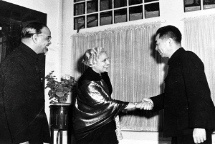
In this excerpt by Narayani Basu, explore K. M. Panikkar’s 1950–51 ordeal as India’s ambassador to China, marked by personal turmoil, diplomatic isolation, and ignored warnings amid rising Cold War tensions.
Narayani Basu
__
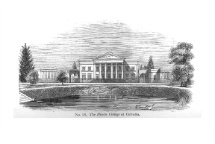
Families despaired, newspapers railed, and society ridiculed a generation of young men who refused to accept inherited custom and ritual in 1830s Calcutta. What was at stake in these scandals of manners? Read Rosinka Chaudhuri’s excerpt to find out.
Rosinka Chaudhuri
__
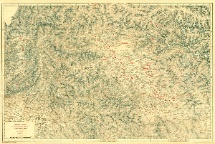
Read this excerpt from Kalhana’s Rajatarangini, where history unfolds through a precise mapping of medieval Kashmir’s towns, rivers, and sacred sites.
Kalhana
__
An analysis of the romanticised narrative of Indian nationalism by examining Vallabhbhai Patel's political journey as a case study.
Rani Dhavan Shankardass
__
An excerpt from the book My Memories of I.N.A. and Its Netaji by Major General Shahnawaz Khan, where he documents how Bose formed the INA, inspired disillusioned Indian soldiers to revolt, and challenged British rule with Axis support.
Major General Shahnawaz Khan
__
In the colonial period, the fear of the male gaze was used by the new patriarchy to restrict women’s access to work and public space, reinforcing a patriarchal division of labour. Read more in our latest excerpt.
Saurav Kumar Rai
__
Was Lala Lajpat Rai's Hindu nationalism congruent with the principles of secularism? Explore our latest excerpt from Vanya Vaidehi Bhargav's fresh off-the-press book - Being Hindu, Being Indian: Lala Lajpat Rai's Ideas of Nation for more.
Vanya Vaidehi Bhargav
__
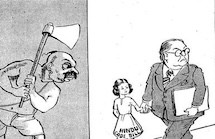
Popularly, we think that political cartoons question the powerful but what if this was not the case? What if political cartoons, replicated structures of the socially dominant? Read how in our new excerpt on political cartoons featuring Dr. Ambedkar.
Unnamati Syama Sundar
__
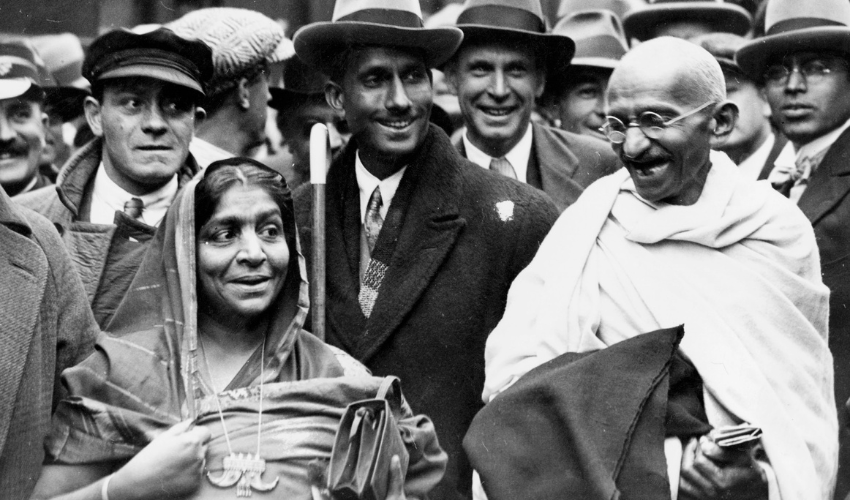
On Martyrs' day 2024, read the poet Sarojini Naidu's tribute to Gandhi given over All India Radio two days after his assassination.
Sarojini Naidu
__
On Republic Day, the Indian History Collective presents you, twenty-two illustrations from the first illustrated manuscript (1954) of our Constitution.
Indian History Collective
__
One of the key petitioners in the Ayodhya title dispute was Bhagwan Sri Ram Virajman. This petitioner was no mortal, but God Ram himself. How did Ram find his way from heaven to the Supreme Court of India to plead his case? Read further to find out.
Richard H Davis
__
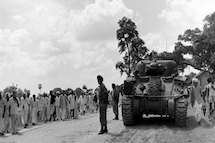
Labelled "one of the shortest, happiest wars ever seen", the integration of the princely state of Hyderabad in 1948 was anything but that. Read about the truth behind the creation of an Indian Union, the fault lines left behind, and what they signify
Afsar Mohammad
__
TIMELINE
-
2500 BC - Present 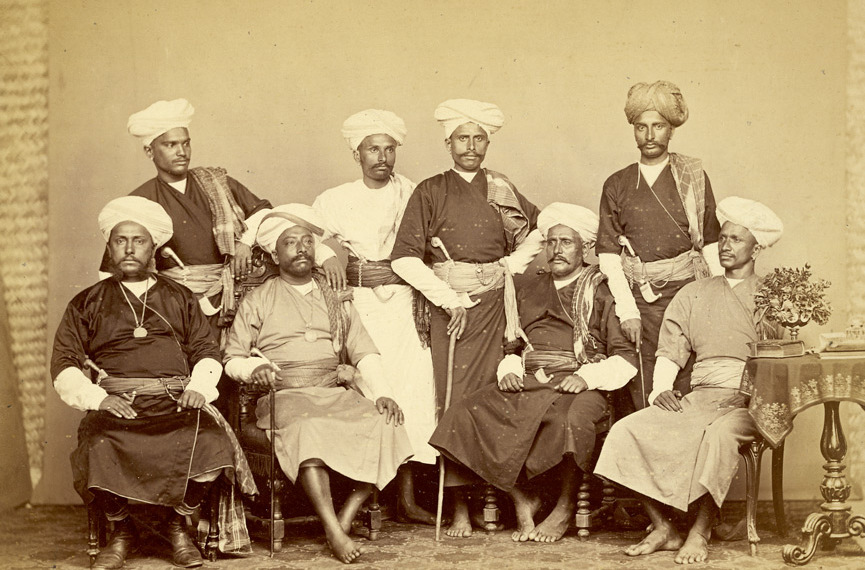
2500 BC - Present Tribal History: Looking for the Origins of the Kodavas -
2200 BC to 600 AD 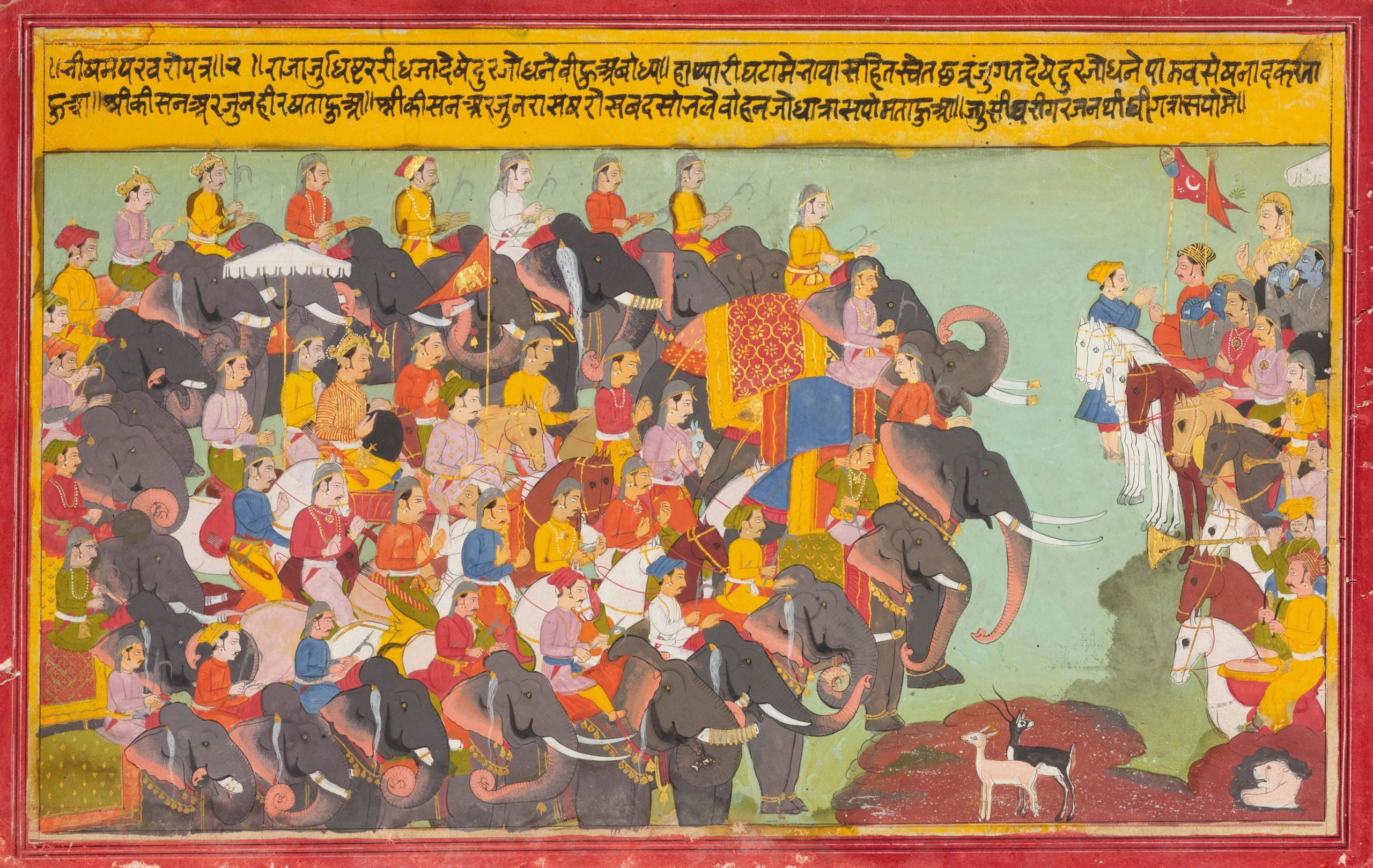
2200 BC to 600 AD War, Political Violence and Rebellion in Ancient India -
400 BC to 1001 AD 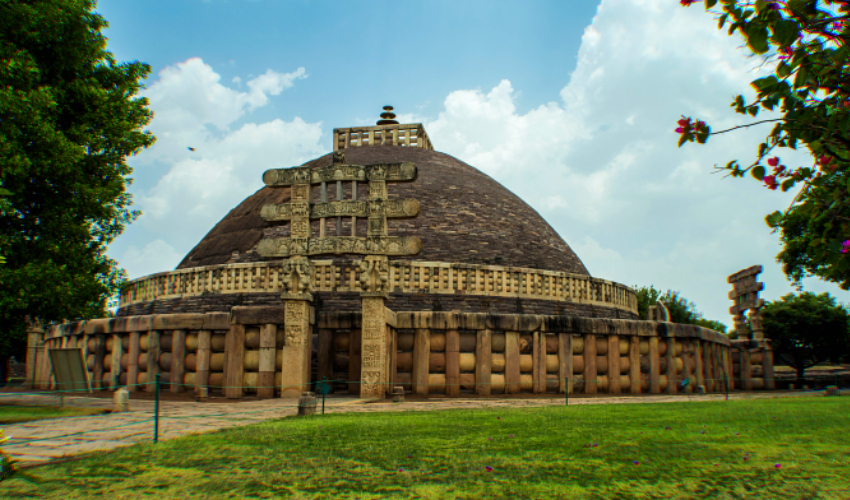
400 BC to 1001 AD The Dissent of the ‘Nastika’ in Early India -
600CE-1200CE 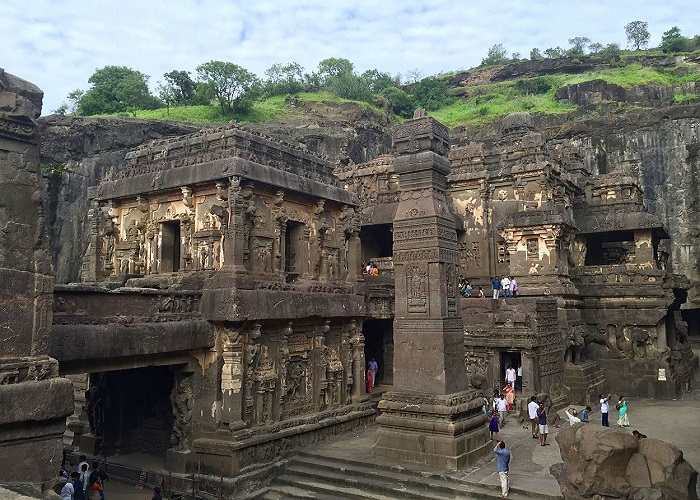
600CE-1200CE The Other Side of the Vindhyas: An Alternative History of Power -
c. 700 - 1400 AD 
c. 700 - 1400 AD A Historian Recommends: Representing the ‘Other’ in Indian History -
c. 800 - 900 CE 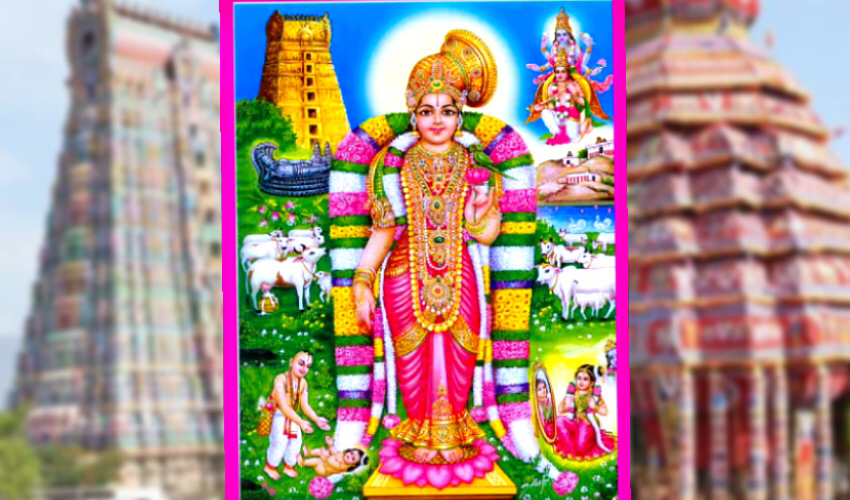
c. 800 - 900 CE ‘Drape me in his scent’: Female Sexuality and Devotion in Andal, the Goddess -
1100–1199 CE 
1100–1199 CE Topography as History: Reading Kashmir through Rajatarangini -
1192 
1192 Sufi Silsilahs: The Mystic Orders in India -
1200 - 1850 
1200 - 1850 Temples, deities, and the law. -
c. 1500 - 1600 AD 
c. 1500 - 1600 AD A Historian Recommends: Religion in Mughal India -
1200-2020 
1200-2020 Policing Untouchables and Producing Tamasha in Maharashtra -
1530-1858 
1530-1858 Rajputs, Mughals and the Handguns of Hindustan -
1575 
1575 Abdul Qadir Badauni & Abul Fazl: Two Mughal Intellectuals in King Akbar‘s Court -
1579 
1579 Padshah-i Islam -
1550-1800 
1550-1800 Who are the Bengal Muslims? : Conversion and Islamisation in Bengal -
c. 1600 CE-1900 CE 
c. 1600 CE-1900 CE The Birth of a Community: UP’s Ghazi Miyan and Narratives of ‘Conquest’ -
1553 - 1900 
1553 - 1900 What Happened to ‘Hindustan’? -
1630-1680 
1630-1680 Shivaji: Hindutva Icon or Secular Nationalist? -
1630 -1680 
1630 -1680 Shivaji: His Legacy & His Times -
c. 1724 – 1857 A.D. 
c. 1724 – 1857 A.D. Bahu Begum and the Gendered Struggle for Power -
1818 - Present 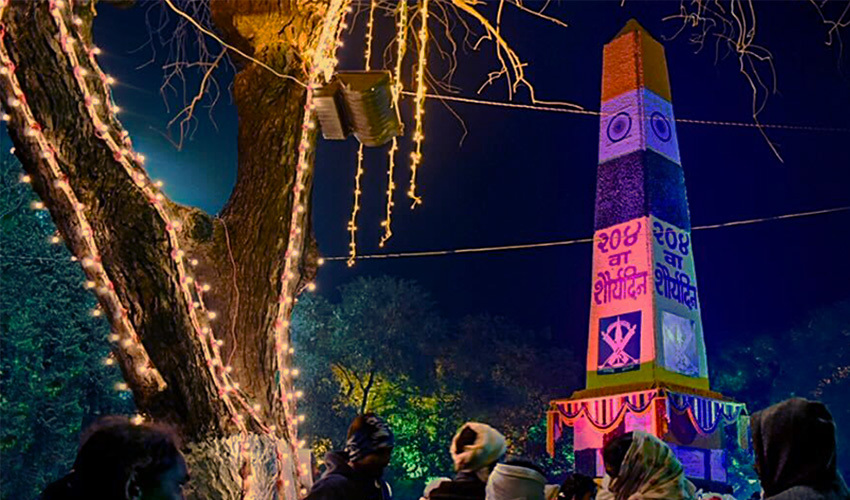
1818 - Present The Contesting Memories of Bhima-Koregaon -
1828-1843 
1828-1843 Scandal of Manners: ‘Urinating Standing Up’ -
1831 
1831 The Derozians’ India -
1855 
1855 Ayodhya 1855 -
1856 
1856 “Worshipping the dead is not an auspicious thing” — Ghalib -
1857 
1857 A Subaltern speaks: Dalit women’s counter-history of 1857 -
1858 - 1976 
1858 - 1976 Lifestyle as Resistance: The Curious Case of the Courtesans of Lucknow -
1883 - 1894 
1883 - 1894 The Sea Voyage Question: A Nineteenth century Debate -
1887 
1887 The Great Debaters: Tilak Vs. Agarkar -
1893-1946 
1893-1946 A Historian Recommends: Gandhi Vs. Caste -
1897 
1897 Queen Empress vs. Bal Gangadhar Tilak: An Autopsy -
1910-1950 
1910-1950 Forging Unity: Vallabhbhai Patel and the Politics of Nationalism -
1913 - 1916 Modern Review 
1913 - 1916 A Young Ambedkar in New York -
1916 
1916 A Rare Account of World War I by an Indian Soldier -
1917 
1917 On Nationalism, by Tagore -
1918 - 1919 
1918 - 1919 What Happened to the Virus That Caused the World’s Deadliest Pandemic? -
1920 - 1947 
1920 - 1947 How One Should Celebrate Diwali, According to Gandhi -
1921 
1921 Great Debates: Tagore Vs. Gandhi (1921) -
1921 - 2015 
1921 - 2015 A History of Caste Politics and Elections in Bihar -
1915-1921 
1915-1921 The Satirical Genius of Gaganendranath Tagore -
1924-1937 
1924-1937 What were Gandhi’s Views on Religious Conversion? -
1900-1950 
1900-1950 Gazing at the Woman’s Body: Historicising Patriarchal Lechery -
1925, 1926 
1925, 1926 Great Debates: Tagore vs Gandhi (1925-1926) -
1928 
1928 Bhagat Singh’s dilemma: Nehru or Bose? -
1930 Modern Review 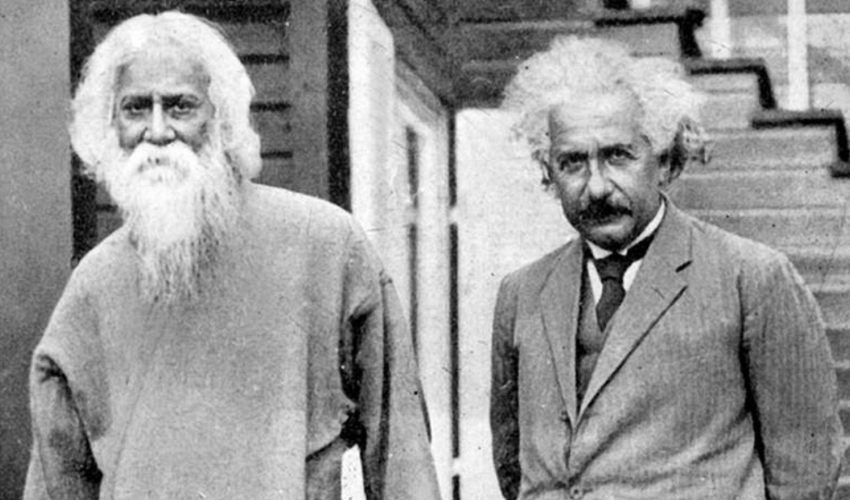
1930 The Modern Review Special: On the Nature of Reality -
1932 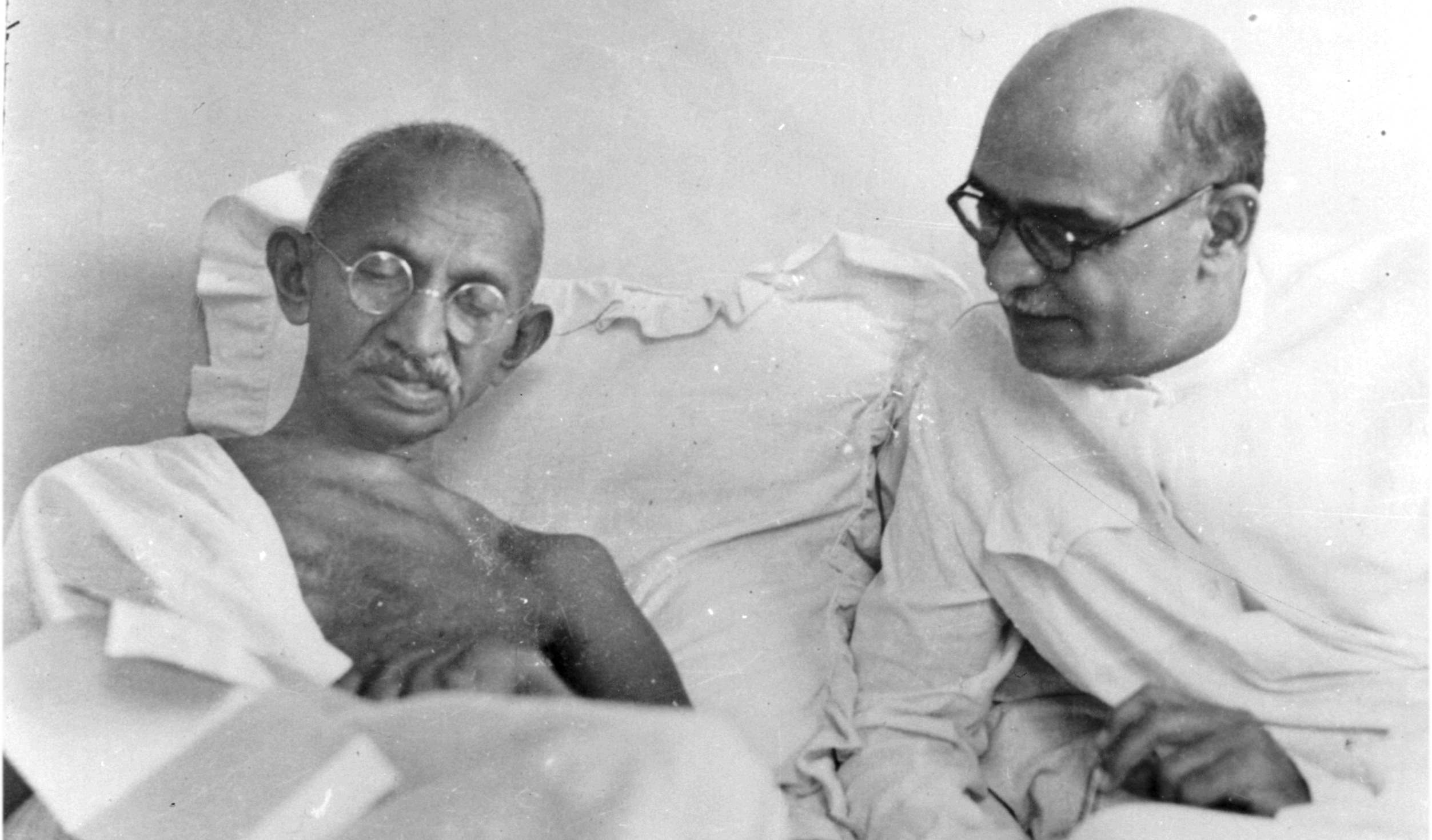
1932 Caste, Gandhi and the Man Beside Gandhi -
1933 - 1991 
1933 - 1991 Raghubir Sinh: The Prince Who Would Be Historian -
1935 
1935 A Historian Recommends: SA Khan’s Timeless Presidential Address -
1865-1928 
1865-1928 Understanding Lajpat Rai’s Hindu Politics and Secularism -
1935 Modern Review 
1935 The Modern Review Special: The Mind of a Judge -
1936 Modern Review 
1936 The Modern Review Special: When Netaji Subhas Bose Was Wrongfully Detained for ‘Terrorism’ -
1936 
1936 Annihilation of Caste: Part 1 -
1936 Modern Review 
1936 The Modern Review Special: An Indian MP in the British Parliament -
1936 
1936 Annihilation of Caste: Part 2 -
1936 
1936 A Reflection of His Age: Munshi Premchand on the True Purpose of Literature -
1936 Modern Review 
1936 The Modern Review Special: The Defeat of a Dalit Candidate in a 1936 Municipal Election -
1937 Modern Review 
1937 The Modern Review Special: Rashtrapati -
1938 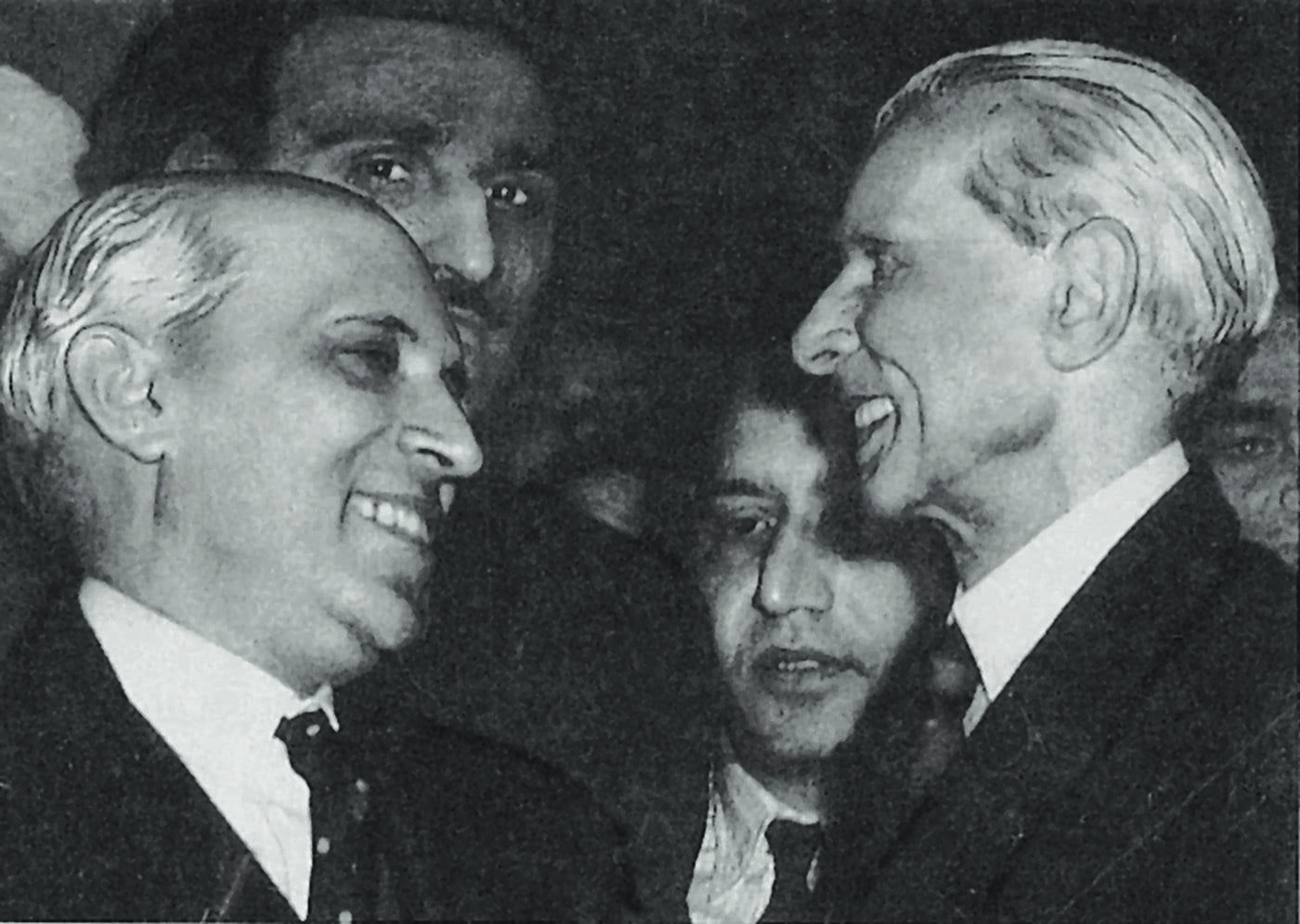
1938 Great Debates: Nehru Vs. Jinnah (1938) -
1942 Modern Review 
1942 IHC Uncovers: A Parallel Government In British India (Part 1) -
1943-1945 
1943-1945 Origin Of The Azad Hind Fauj -
1942-1945 
1942-1945 IHC Uncovers: A Parallel Government in British India (Part 2) -
1946 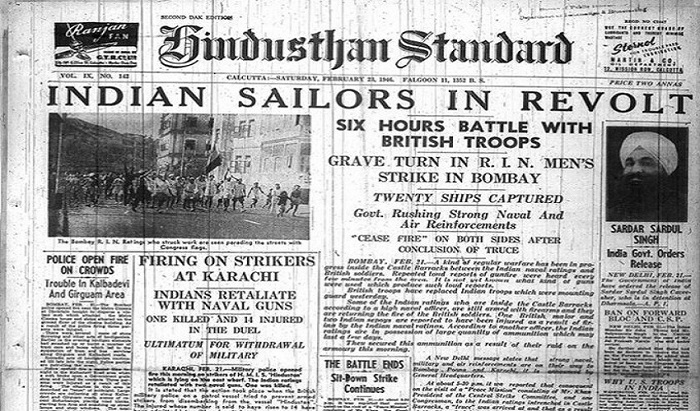
1946 Our Last War of Independence: The Royal Indian Navy Mutiny of 1946 -
1946 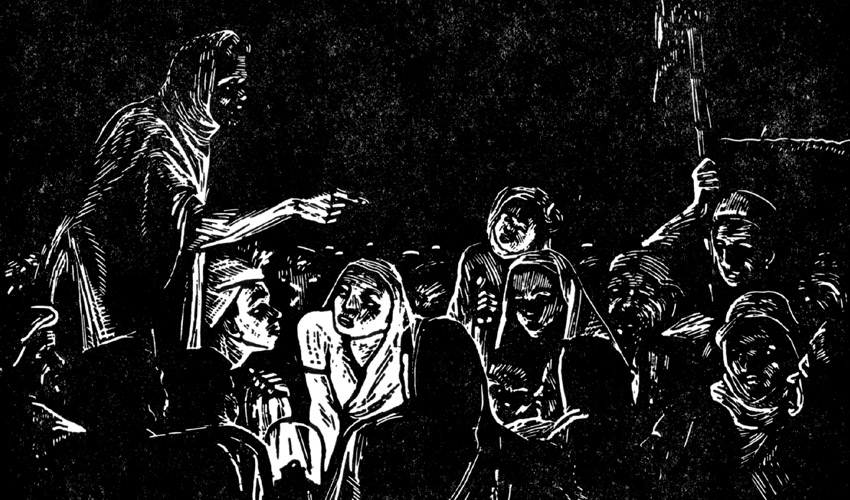
1946 An Artist’s Account of the Tebhaga Movement in Pictures And Prose -
1946 – 1947 
1946 – 1947 “The Most Democratic People on Earth” : An Adivasi Voice in the Constituent Assembly -
1946-1947 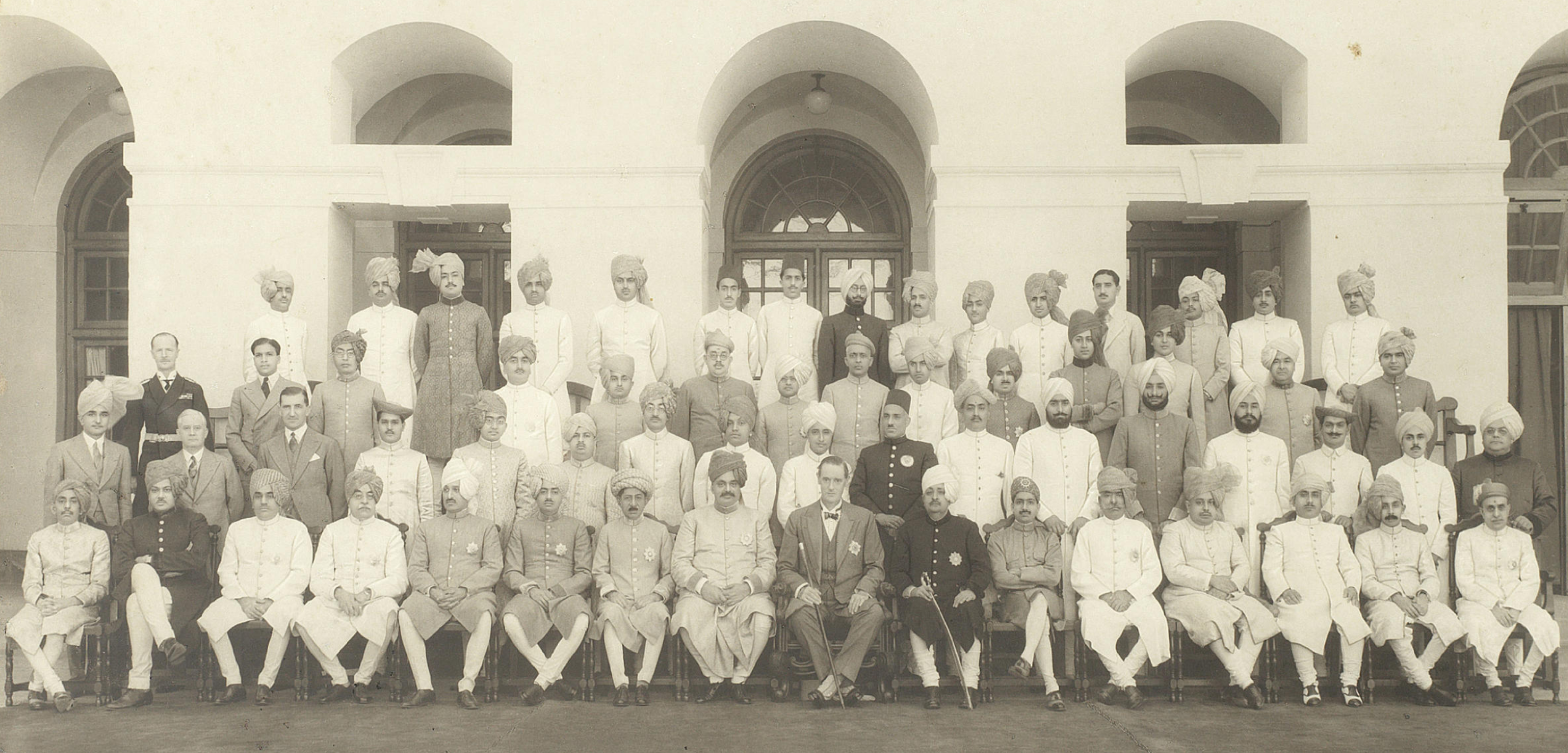
1946-1947 VP Menon and the Birth of Independent India -
1916 - 1947 
1916 - 1947 8 @ 75: 8 Speeches Independent Indians Must Read -
1947-1951 
1947-1951 Ambedkar Cartoons: The Joke’s On Us -
1948
1948 “My Father, Do Not Rest” -
1940-1960 
1940-1960 Integration Myth: A Silenced History of Hyderabad -
1948 
1948 The Assassination of a Mahatma, the Princely States and the ‘Hindu’ Nation -
1949 
1949 Ambedkar warns against India becoming a ‘Democracy in Form, Dictatorship in Fact’ -
1950 
1950 Illustrations from the constitution -
1951 
1951 How the First Amendment to the Indian Constitution Circumscribed Our Freedoms & How it was Passed -
1950-1951 
1950-1951 Panikkar’s 1950 Ordeal: China’s Moves, Family Crisis, and Diplomatic Distrust -
1967 
1967 Once Upon A Time In Naxalbari -
1970 
1970 R.C. Majumdar on Shortcomings in Indian Historiography -
1973 - 1993 
1973 - 1993 Balasaheb Deoras: Kingmaker of the Sangh -
1975 
1975 The Emergency Package: Shadow Power -
1975 
1975 The Emergency Package: The Prehistory of Turkman Gate – Population Control -
1977 – 2011 
1977 – 2011 Power is an Unforgiving Mistress: Lessons from the Decline of the Left in Bengal -
1984 
1984 Mrs Gandhi’s Final Folly: Operation Blue Star -
1916-2004 
1916-2004 Amjad Ali Khan on M.S. Subbulakshmi: “A Glorious Chapter for Indian Classical Music” -
2008 
2008 Whose History Textbook Is It Anyway? -
2006 - 2009 
2006 - 2009 Singur-Nandigram-Lalgarh: Movements that Remade Mamata Banerjee -
2020 
2020 The Indo-China Conflict: 10 Books We Need To Read -
2021 
2021 Singing/Writing Liberation: Dalit Women’s Narratives