ARCHIVE
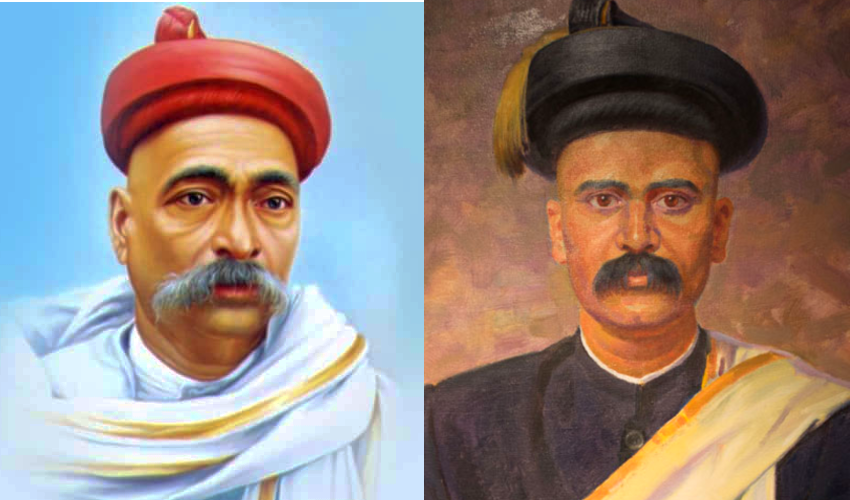
Tilak and Agarkar were close associates in their younger days. Born into the brahmanical class, they both studied together in Pune. In those days, Western education was a means to acquire a job in the British colonial bureaucracy, albeit at a lower level. But Tilak and Agarkar vowed not to work for the British government in India in any capacity. Instead, they decided to dedicate their lives to nation building. One way to do this was through education and raising public awareness through the press. Hence, along with another elite Brahman, Vishnushastri Chiplunkar, they started a ‘New English High School’ and two newspapers Kesari in Marathi and Maratha in English in 1881. Agarkar became the editor of Kesari and Tilak that of Maratha. Though working together, they were each of a different bent of mind from the other. Tilak’s father was a teacher of Sanskrit, and he himself had considerable mastery over it. Along with formidable Sanskrit, he acquired considerable mastery over the Hindu scriptures. This inculcated in him, some degree of pride in the Hindu Brahmanical tradition. He felt strongly about the political domination of India by an alien power and was among the pioneers to publicly express strong views against it. He objected to any British interference in reforming Hindu society. He took a position that Indian society should be reformed by Indians themselves, and not by an alien power. He maintained that, though politically defeated, the Hindus have superior traditions, and this gave them an independent identity under British imperial domination. Tilak personified this identity and associated it with the bigger concept of Swarajya. His painstaking efforts in organizing people through popular Ganesh Puja and Shivaji Jayanti are well known. This is an example of what Partha Chatterjee has called the ‘inner domain of sovereignty’, whereby anti-colonial nationalism creates an independent space within the colonial society to organize and launch its struggle against imperial domination.

The Maratha, edited by Tilak
Agarkar on the other hand, was influenced by Western intellectual tradition. His sarcastic criticism of Hinduism reflects Gibbon’s comments on Christianity in his The History of the Decline and Fall of the Roman Empire; Agarkar was also impressed by the democratic tradition of the west and had no hesitation in taking help from the British administration in introducing reforms in India. Fired by patriotism, they both managed to work together in spite of the attitudinal differences and also faced imprisonment together in British jails.
He (Tilak) objected to any British interference in reforming Hindu society. He took a position that Indian society should be reformed by Indians themselves, and not by an alien power… Agarkar on the other hand, was influenced by Western intellectual tradition. His sarcastic criticism of Hinduism reflects Gibbon’s comments on Christianity in his The History of the Decline and Fall of the Roman Empire… Fired by patriotism, they both managed to work together in spite of the attitudinal differences and also faced imprisonment together in British jails.
The Appearance of a Crack
The differences between them started surfacing at the functioning of the New English High School, which they were running with great enthusiasm. Agarkar requested a salary raise in a meeting, but Tilak opposed it. Tilak was relatively affluent, and Agarkar was mostly dependent on his salary. Tilak accused Agarkar of deviating from the noble mission. Agarkar reacted by calling Tilak ‘obstinate’ in claiming a moral high ground. Tilak did not like Agarkar’s sarcasm about Hinduism in Kesari. Agarkar on the other hand was uneasy with Tilak’s aggressive criticism of the British government and some prominent people like Ranade. These differences finally led to Agarkar resigning from the Kesari and starting his newspaper Sudharak in 1887. Now it was an open war of words between the two, with Sudharak on the one hand and Kesari and Maratha on the other.

Kesari, which Agarkar edited, then resigned from
Tradition Vs Modernity
Tilak believed that the masses in India hav lost their self-confidence under the oppressive British colonial rule. The need of the hour therefore is to unite and work towards taking political power from the alien hands. At a time when the anti-colonial political mobilization is underway, social reforms will shift the focus from the main goal of national liberation. Accordingly, divided opinions about social reforms would only suit British machination to further divide the Hindu society. Tilak argued further, that the Indian masses are attached to their age-old traditions. Its violent criticism will lead to Tejobhanga, i.e. loss of spirit.
Sudharak of Agarkar became the mouthpiece of those who were in favor of prioritizing social reforms. They took a general stand that before asking for a democratic form of government in the public sphere, there should be democracy within the house. If we treat our women as slaves and have an oppressive caste hierarchy, we have no right to ask for equality. This aspect was exposed in great detail by Tarabai Sindhe in her trenchant critique of Hindu patriarchy. Tilak on the other hand, rejected the assumption of Indian women being treated as slaves. As stated earlier, he accepted the need for social reforms, but maintained that it should come from within and not be superimposed by the alien government. Tilak also claimed that the British are deliberately pointing out the shortcomings of Hindu society to justify their imperial domination. He accused the Sudharak, stating that, by aggressively criticizing Hindu tradition, they were playing into the hands of the British. Some of the supporters of Sudharak like Ranade, were in fact in the British service. Pointing this out, Tilak claimed that such people will not state anything that will antagonize their colonial masters. He was of the opinion that, if the British are allowed to interfere in social matters, very soon they will also start interfering in other things, such as ritual observances and practices. Hence, this encouragement of social reformers by the British is a deliberate plan to divert the attention of Indian people from core political issues raised by the national movement. Sudharak’s unwillingness to understand this, caused Tilak a great deal of anguish.
Tilak and Agarkar both focused primarily on urban society. A vast majority of the non-Hindu and rural women remained outside the purview of the Tilak-Agarkar debate. This also applies to their views on social reforms in general. Hence, their approach remained restricted and marginal, and could not really go deeper into the Indian social system.
Tilak and Agarkar both focused primarily on urban society. A vast majority of the non-Hindu and rural women remained outside the purview of the Tilak-Agarkar debate.
Tilak repeatedly stated that he is not against social reforms per se. But it should not be a top priority of the Indian struggle. When Sudharak took up a stand against the tonsuring of Brahmin widows, Tilak reacted by stating that stopping the practice is not going to have any substantial effect on Indian society. Agarkar on the other hand was deeply concerned about women’s issues. As a child, he had seen the suffering of his two widowed aunts. Apart from that, his thoughts were also influenced by J.S. Mill’s Subjection of Women, which states that the standard of a given society is indicated by the position of women.
Tilak was more focused on the use of political power to undertake social reforms. He maintained that, so long as political power was in the hands of alien rulers, no serious reforms can be undertaken. Therefore, priority should be given to acquiring political power, and social reforms would come gradually. He gave an example of Parshuram Bhau Patwardhan, the Brahmin ruler of small principalities, who tried to arrange the marriage of his widowed daughter and sought scriptural support for it. However, he was dissuaded by the orthodox Brahmins. And Parshuram Bhau was unable to get his widowed daughter married. Here, the weakness of Tilak’s approach was exposed.
Agarkar on the other had tried to rationalize that social reforms can be best achieved under British rule, as the white colonial masters were immune from public opinion. If the rulers are indigenous, they will only initiate those reforms which will support their power structure.
Agarkar… tried to rationalize that social reforms can be best achieved under British rule, as the white colonial masters were immune from public opinion. If the rulers are indigenous, they will only initiate those reforms which will support their power structure.

Mahadev Govind Ranade
A case of Rukhmabai in 1886 proved the difference of opinion between them. Rukhmabai was married at a very young age. But after attaining maturity, she refused to accept the marriage as it was done without her consent. The case went to court. Tilak supported the right of the husband over her, and Agarkar and Ranade stood beside Rukhmabai. The high court finally ruled in favor of the husband.
In order to prove their point, sometimes both the parties lost decorum. Pointing out the weakness of twenty-five crore Indians, who are ruled by one lac Europeans, Agarkar called the natives ‘Shudra Jantu,’ i.e. insignificant insects. No wonder Tilak, being proud of the Indian heritage, reacted sharply.
Age of Consent Bill, 1891
Marriages of young girls were common practice in those days. The young girls were very often at high risk of early pregnancy and sometimes even death. There was a demand from certain sections of progressive Indians to enact a law to prevent this. In 1889 a ten-year-old girl named Phulmoni Dasi died due to a brutal rape by her thirty-five-year-old husband Hari Mohan Maitee in Bengal Province. As he was married to her, rape charges could not be proved. But he was found guilty of causing death due to negligence. This episode was a catalyst that led to the enactment of the law called ‘Age of Consent Act, 1891’ by the Governor-General and his council. It made sexual intercourse with a girl less than twelve years of age a criminal offence.
Sudharak welcomed this initiative. But Tilak, characteristic of his dislike for British intervention in socio-religious matters, opposed the legislation. It is surprising that he was not moved by the death of an eleven-year old girl. Was he insensitive towards the unspeakable sufferings of the young girls who were married to grown up men? Did he personify the orthodox Brahmanical patriarchal attitude of treating women as less than human beings? Are women expected to suffer and, if necessary, die without a whimper to uphold the tradition that is determined by patriarchy? Tilak was present in the Calcutta session of the Indian National Congress in 1890. Had he not heard about the Phulmoni’s case which happened just a year back in Bengal? Was the matter discussed among the Congress delegates? Was the Congress leadership so insensitive to the women’s plight? All these questions remained unanswered.
In 1889 a ten-year-old girl named Phulmoni Dasi died due to a brutal rape by her thirty-five-year-old husband Hari Mohan Maitee in Bengal Province. As he was married to her, rape charges could not be proved. But he was found guilty of causing death due to negligence. This episode was a catalyst that led to the enactment of the law called ‘Age of Consent Act, 1891’ by the Governor-General and his council.
Marriage for a Hindu, is considered a sacred act. Hence, it was easier for Tilak to mobilize public support against the legislation. It is stated that many women were also opposed to the ‘Age of Consent Act’. Gayatri Spivak in her essay, Can the Subaltern Speak? narrates that the women became so psychologically imprisoned by the patriarchal narrative/indoctrination that they also adopt the language that suits patriarchy. The hegemony makes women the victim of ‘Stockholm Syndrome’, where the prisoners of the system start loving their own tormentors as they see no escape from the shackle. This can also be described as a situation of ‘hegemony with consent,’ from Gramsci’s perspective.
Though Tilak opposed the legislation, he educated his daughter and arranged her marriage at the age of fifteen. Thus by action, he showed that he is not opposed to social reforms as such. He only emphasized that it has to come gradually and, also, from within the society.
Who was the People’s Leader?
If we look at the relative support that these two different groups received, we have evidence to suggest that Tilak understood the pulse of the masses better than ‘Sudharaks’ (reformers). His support base suggests that the people in general were more receptive to prioritizing national liberation/Swaraj over social reforms. His strong criticism of Sudharaks made them so unpopular in Pune that people took out a funeral procession of the effigy of Sudharak, from in front of Agarkar’s residence, and burnt it.
Tilak deliberately stated what appealed to the people. He confessed to his daughter that he approved of the reforms the Sudharaks wanted to initiate, but couldn’t say it in public, for the fear of losing popular support. Was he a clever politician? Should a true leader not state what he sincerely believes to be good for the society, even if it means an erosion of popularity? Or should he understand the pulse of the masses and state only those things that appeal to people? Or try to maintain a balance between two extremities? Tilak believed that if he plunged into reforming the society, he would not be able to arouse the masses against colonial domination, which was his main mission. As he boldly stated, “Swarajya is my birthright and I shall have it.”

Pandita Ramabai
Turning things around, Agarkar accused Tilak of an addiction to popularity even though agreeing with social reforms in his private thoughts. The Agarkar-Tilak debate sometimes degenerated into personal attacks. For example, when Tilak had tea and biscuits in a Christian mission, it was highlighted by Agarkar in his newspaper with the intention of projecting Tilak as a hypocrite who claims to be a leader of the traditional Hindus and, yet, has no hesitation in accepting food from the missionaries. Later he also alleged that Tilak was eating rice from the hands of a Muslim. Enraged, Tilak was preparing to file a case against this ‘defamation’ but, with the intervention of Ranade, the matter was settled. Nevertheless, when Pandita Ramabai launched a lifelong struggle against Hindu caste system and brahmanical patriarchy and eventually converted to Christianity to emancipate herself, every one of the nationalist and social reformers turned against her. She was completely marginalized and even erased from the collective consciousness.
When Tilak had tea and biscuits in a Christian mission, it was highlighted by Agarkar in his newspaper with the intention of projecting Tilak as a hypocrite who claims to be a leader of the traditional Hindus and, yet, has no hesitation in accepting food from the missionaries.
The obstinacy of Tilak is well known. Once he decided on a position, he did not budge from it. He displayed a remarkable capacity for work. Nevertheless, he lacked the modesty to consider anyone else his equal. Oftentimes, his stubbornness proved to be resolute. On the issue of having tea and biscuits with the missionaries, he faced social ostracism bravely and refused to submit to extreme orthodoxy. Ranade, a well-known Sudharak, also had tea in the Christian mission, but submitted to the dictates of religious orthodoxy by undertaking Prayascitta (penance) ordered by Shankaracharya.
So, the difference in social attitude and political outlook was stark. A popular Marathi proverb, “moden pan vaknar nahi” (I will break but will not bend), probably suits Tilak because, in his zeal for ‘Swaraj’, he could not overcome the prejudices and practices of the caste system.
However, it seems that these obstinate, uncompromising traces of his personality added some ‘masculine’, rustic charm and appealed to people who were looking for a ‘strong’ leader who had the courage to stand against the might of the British empire.
While criticizing Tilak, the Sudharaks also did not follow in their personal life what they preached in public. Ranade’s submission to Shankaracharya is already mentioned above. He was one of the leading luminaries of the movement for widow’s remarriage. But on the death of his first wife, he married a child bride instead of a widow. Telang, though he opposed child marriage, got his own daughter married at the age of eight. Agarkar did not object to these discrepancies in thought and practice. Tilak did not miss any opportunity to point out this double standard of Sudharaks and called them ‘sign boards’, who show the way to others, but do not themselves traverse it. Ideological differences blended with ego and turned the situation between these two stalwarts into long drawn conflicts.
Visible contradictions in the practice and preaching of both Tilak and Agarkar made them both relevant and irrelevant during their times and beyond.
The Sudharaks also did not follow in their personal life what they preached in public. Ranade’s submission to Shankaracharya is already mentioned above. He was one of the leading luminaries of the movement for widow’s remarriage. But on the death of his first wife, he married a child bride instead of a widow. Telang, though he opposed child marriage, got his own daughter married at the age of eight.
It seems that Agarkar came around to the opinion of Tilak in the later stages of his life. In an article written three years before his death, Agarkar also accepted that political reforms should be given priority over social ones. But his dislike for Tilak did not subside. In his last days, Agarkar was bed ridden. Tilak visited him. According to C.G. Devdhar, a close associate of Agarkar, the latter was not very comfortable with Tilak’s visit and wished him to go away. But according to a version provided by Agarkar’s wife, Yashodabai, Agarkar was relieved that the bitterness between him and Tilak was resolved before he finally shut his eyes.
Agarkar appears to be a rather lonely figure, who lived a life of poverty. As he departed from Tilak, the latter’s popularity graph soared. Ranade became a judge and went to Bombay. Gokhale also became well known. It was only Agarkar, who appears to be lonely and led a life of deprivation. It is said that after his death, a small amount of money was found in his home tied in a paper, on which it was mentioned that this money was kept for his funeral. Agarkar’s life appears to be like a lonely mountain, that had burnt its own trees and deprived itself of shade. Agarkar’s wife says that her husband had never thought about himself, but about others. But sadly, his work was not valued in his lifetime.
Vishram Bedekar’s drama ‘Tilak ani Agarkar’ is a very well researched piece of creative writing. The concluding scene of this drama portrays Agarkar’s death, where Tilak is present. We hear a cry of a newly born girl in the background and Tilak says, “The girls born in Maharashtra do not have to cry so much now, because Agarkar was born here.”
The concluding scene of this drama portrays Agarkar’s death, where Tilak is present. We hear a cry of a newly born girl in the background and Tilak says, “The girls born in Maharashtra do not have to cry so much now, because Agarkar was born here.”
Conclusion
Looked at from one angle, the Tilak-Agarkar debate depicts the coming of age of Indian nationalism and also the confidence to tackle social issues independently, and mobilize the masses against British colonial rule. But from a critical angle, this debate was not really relevant for the vast majority of rural and working women of the Hindu community. It also did not do anything for the tribals. It completely ignored and alienated non-Hindus, i.e., Muslims, Christians, tribal communities and others. They formed a substantial proportion of the population in the country.
From a critical angle, this debate was not really relevant for the vast majority of rural and working women of the Hindu community. It also did not do anything for the tribals. It completely ignored and alienated non-Hindus, i.e., Muslims, Christians, tribal communities and others.
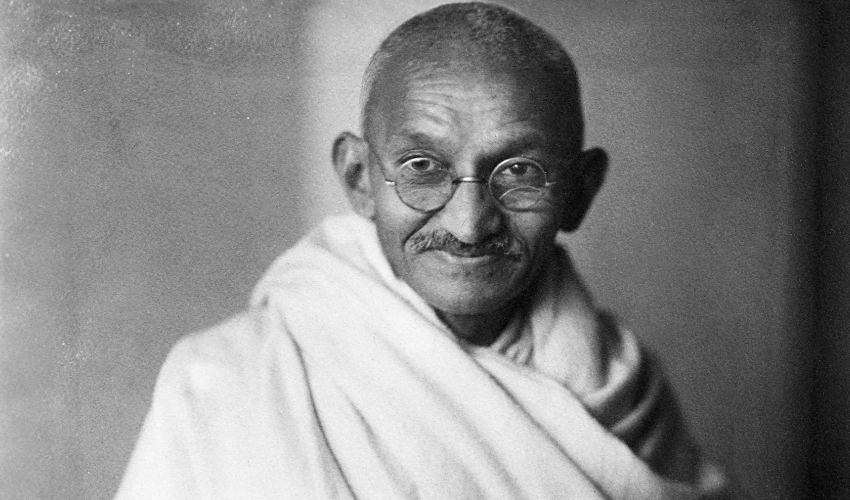
So, the debate scratched only the very thin surface of Indian society and did not go deep enough to usher in any radical change or social reform. Most importantly, the issue of violence against women was not even addressed. The debate took place within the elite upper caste Hindu social framework. It never challenged the oppressive social system that was presided over by an equally oppressive British colonial rule. The British colonialists, nationalists, and social reformers would try to address women’s issues without actually involving the women themselves in their own emancipation. While Tilak and Agarkar debated endlessly on what should come first, national liberation or social reform, Gandhi tried to show later that both can be undertaken simultaneously.
The British colonialists, nationalists, and social reformers would try to address women’s issues without actually involving the women themselves in their own emancipation.
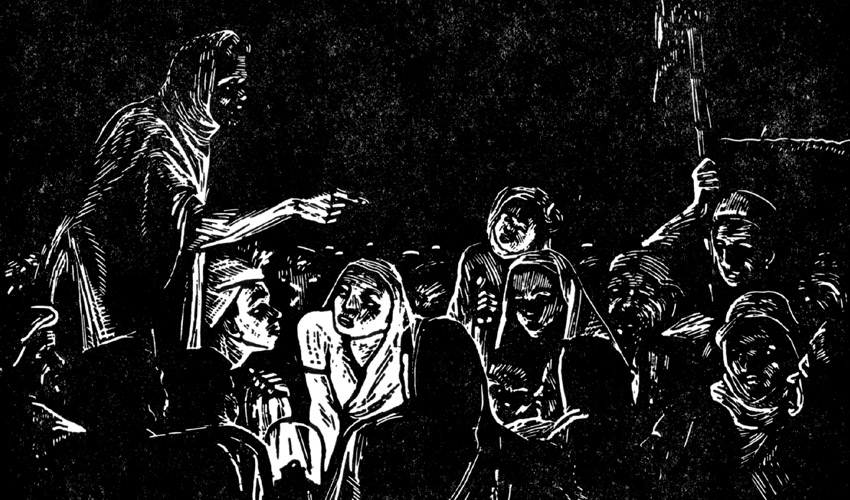
In this centenary tribute by Ramu Ramanathan, we explore Narayan Gangaram Surve's journey from an abandoned pavement child to the voice of Mumbai's working class, through the mills, bastis, and protest marches that became his university.
Ramu Ramanathan
__
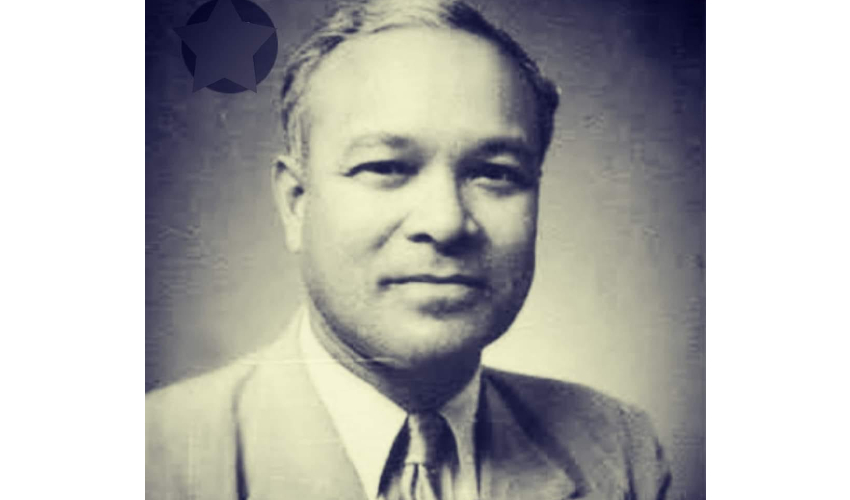
In this excerpt by Narayani Basu, explore K. M. Panikkar’s 1950–51 ordeal as India’s ambassador to China, marked by personal turmoil, diplomatic isolation, and ignored warnings amid rising Cold War tensions.
Narayani Basu
__
Families despaired, newspapers railed, and society ridiculed a generation of young men who refused to accept inherited custom and ritual in 1830s Calcutta. What was at stake in these scandals of manners? Read Rosinka Chaudhuri’s excerpt to find out.
Rosinka Chaudhuri
__

Read this excerpt from Kalhana’s Rajatarangini, where history unfolds through a precise mapping of medieval Kashmir’s towns, rivers, and sacred sites.
Kalhana
__
An analysis of the romanticised narrative of Indian nationalism by examining Vallabhbhai Patel's political journey as a case study.
Rani Dhavan Shankardass
__
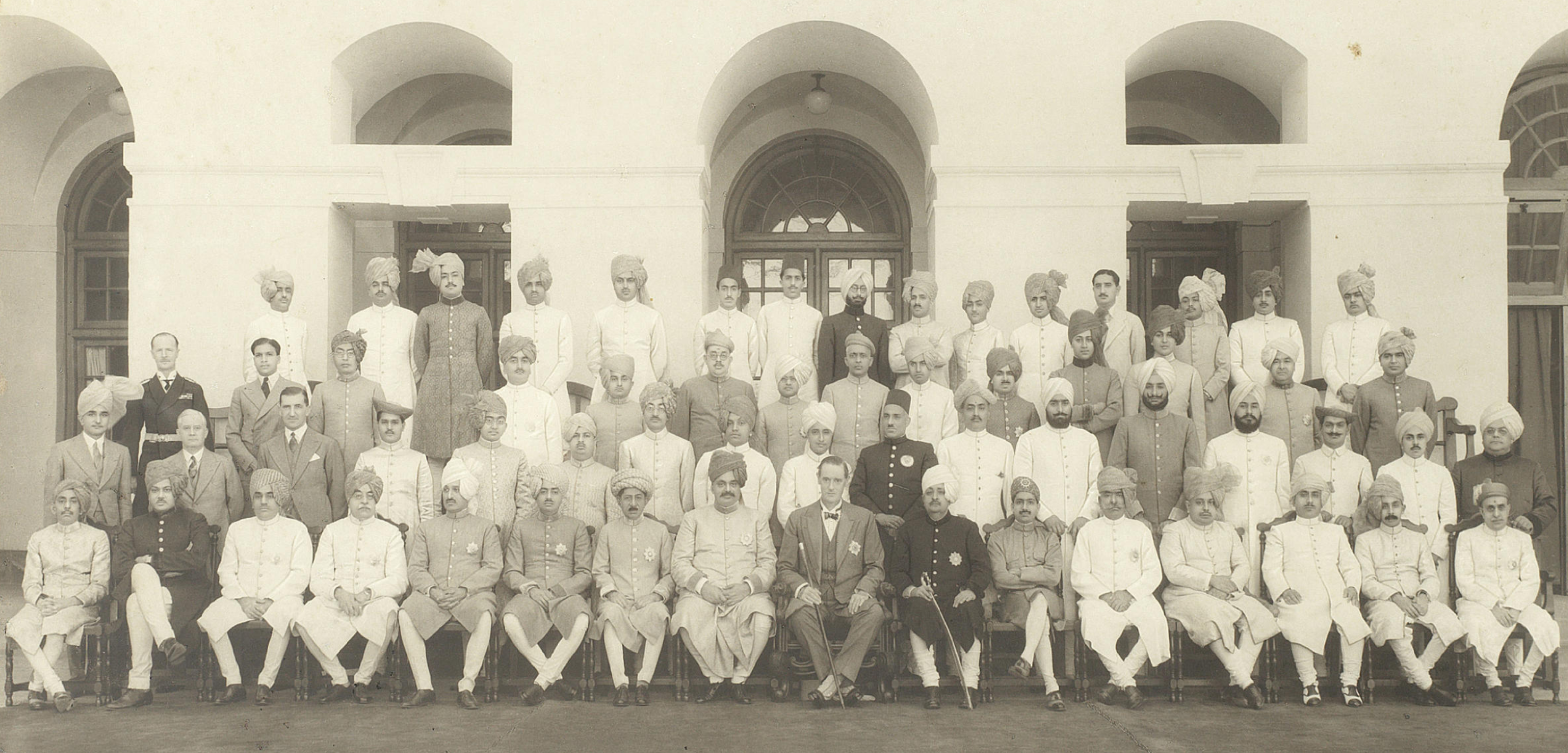
An excerpt from the book My Memories of I.N.A. and Its Netaji by Major General Shahnawaz Khan, where he documents how Bose formed the INA, inspired disillusioned Indian soldiers to revolt, and challenged British rule with Axis support.
Major General Shahnawaz Khan
__
In the colonial period, the fear of the male gaze was used by the new patriarchy to restrict women’s access to work and public space, reinforcing a patriarchal division of labour. Read more in our latest excerpt.
Saurav Kumar Rai
__
Was Lala Lajpat Rai's Hindu nationalism congruent with the principles of secularism? Explore our latest excerpt from Vanya Vaidehi Bhargav's fresh off-the-press book - Being Hindu, Being Indian: Lala Lajpat Rai's Ideas of Nation for more.
Vanya Vaidehi Bhargav
__
Popularly, we think that political cartoons question the powerful but what if this was not the case? What if political cartoons, replicated structures of the socially dominant? Read how in our new excerpt on political cartoons featuring Dr. Ambedkar.
Unnamati Syama Sundar
__
On Martyrs' day 2024, read the poet Sarojini Naidu's tribute to Gandhi given over All India Radio two days after his assassination.
Sarojini Naidu
__
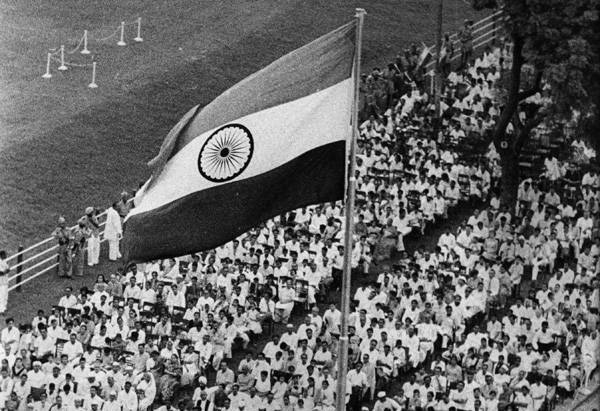
On Republic Day, the Indian History Collective presents you, twenty-two illustrations from the first illustrated manuscript (1954) of our Constitution.
Indian History Collective
__